
One person smells real, fresh lavender in a perfume. To a second, the same lavender brings mothballs to mind. To a third, dried flowers. For one it is a scent of peace and relaxation, for another a moment of cleaning.
Who is right? Actually - everyone.
This is often exactly how it is with fragrances. One person says: „fresh, natural, wonderful”, while another grimaces and replies: „but this smells like detergent”. The same scent. The same moment. Two completely different reactions.
And no, this does not necessarily mean that someone has „better taste”, a „worse nose”, knows less, or has a more refined opinion. Scent is not something we perceive completely objectively. It is not a photograph that everyone sees exactly the same way. Scent is an interpretation. And this interpretation passes through our body, memory, emotions, experiences, and everything we have already encountered before.
Is fragrance perception merely a matter of taste?
Of course, taste exists and matters, but it does not explain everything. Some prefer fresh scents, others heavy ones. Someone loves white flowers, someone else cannot stand smelling them for more than 2 minutes. One person seeks purity in perfumes, another seeks something strange or unsettling.
And this is absolutely normal.
If everyone liked exactly the same fragrances, the perfume world would be terribly boring. There would be no room for experiments, personal obsessions, little quirks, and moments when someone says: „I do not know why, but this scent is mine”.
But taste is only the first level. It tells us whether we like something, but primarily relates to our own perception.s. It does not always explain why the exact same perfumes smell fresh and natural to one person, yet suffocating and artificial to another.
Scent is not just about a simple choice: I like it or I do not like it. Sometimes we react not to the composition itself, but to the story that our brain immediately attaches to it. To a memory or an association. To something we once smelled frequently, even if today we can no longer say exactly where and when.
That is why two people can have completely different reactions to the exact same perfumes - and neither of them has to be wrong.
Every nose works a little differently
Before a scent becomes a memory, an emotion, or an opinion like „I love it” or „I hate it”, something much more fundamental must occur. Odor molecules reach the nose and stimulate olfactory receptors. It sounds simple, but it is not quite so simple.
We do not have identical „equipment” for perceiving scents. Olfactory receptors can differ between individuals, which is why two people do not always smell the same perfumes the same way. One person will instantly catch a green note that another will not even notice. Someone will primarily smell vanilla, while someone else will say: „what vanilla? I only smell powder”.
The very nature of perfumes does not make it any easier either. Perfumes are not one simple molecule. Not even monoperfumes. They are complex compositions of many fragrant substances that together create something more than the sum of their individual ingredients. When we smell them, the brain does not usually break them down into a full list of elements: vanilla, musk, wood, aldehydes, amber. More often, it glues them into a whole - an overall impression. Only from this whole do individual notes stand out. Usually the ones to which we are more sensitive, which we know well, or which we strongly associate with something.
A professional perfumer or a trained person can recognize more nuances than someone who simply uses perfumes for pleasure. They have a larger scent „dictionary”, more experience, and better-trained attention. But even an expert does not perceive complex perfumes as a complete list of all molecules, one by one. Training helps to better recognize and name scents, but it does not change the fact that a mixture is often perceived as a combined whole.
This is why conversations about perfumes sometimes sound as if everyone is talking about a different scent. And in a way, that is somewhat true. We can perceive certain molecules very strongly, and others more weakly. We are highly sensitive to some, while others may be almost imperceptible to some people. So it is not just that someone „does not know how” to smell something or „wrongly describes” perfumes. Sometimes the nose genuinely perceives a different part of the very same composition.
And this is just the beginning, because a scent does not end in the nose. Later comes the skin, temperature, emotions, memory, and the entire private dictionary of associations we carry in our heads.
Scent is not just the nose - the brain has a say here too
The nose receives odor molecules, but it is the brain that tries to make sense of them. It does not merely ask: „what is this substance?”. It asks rather: „what do I know this from?”, „was it pleasant?”, „is it safe?”, „do I want to be closer to this scent, or rather step away from it?”. That is why a scent very quickly stops being neutral information. It becomes an association.
The same clean note might smell fresh to one person, like laundry dried in the sun, and artificial and detergent-like to another, like washing powder. And this is one of the reasons why the word „chemical” can be so difficult in conversations about perfumes. Sometimes someone genuinely smells something sharp, synthetic, or unnatural. But sometimes „chemical” simply means: my brain connected this scent with a detergent, floor cleaner, air freshener, or a cosmetic I have known for years.
A good example are the fresh, marine scents of the 90s and 2000s, which for many were once a symbol of purity, elegance, and freshness. Later, similar accords began appearing in shower gels, deodorants, laundry liquids, and cleaning products. The result? One person smells freshness and nostalgia in them. A second says: „this smells like a bathroom”. This does not mean the scent itself has become worse. It is just that the context in which we came to know it has changed.
Sometimes associations are quite simple. A scent reminds us of washing powder, a childhood cream, a school corridor, or a holiday suntan lotion. Other times it acts much more powerfully. A single scent can suddenly evoke a very specific memory - a place, a person, or a situation we have not thought about for a long time.
This phenomenon is called the Proust effect. Scents are exceptionally strongly linked with autobiographical memory and emotions, which is why they can return to us not as dry information, but as a complete feeling: peace, longing, safety, warmth, or nostalgia.
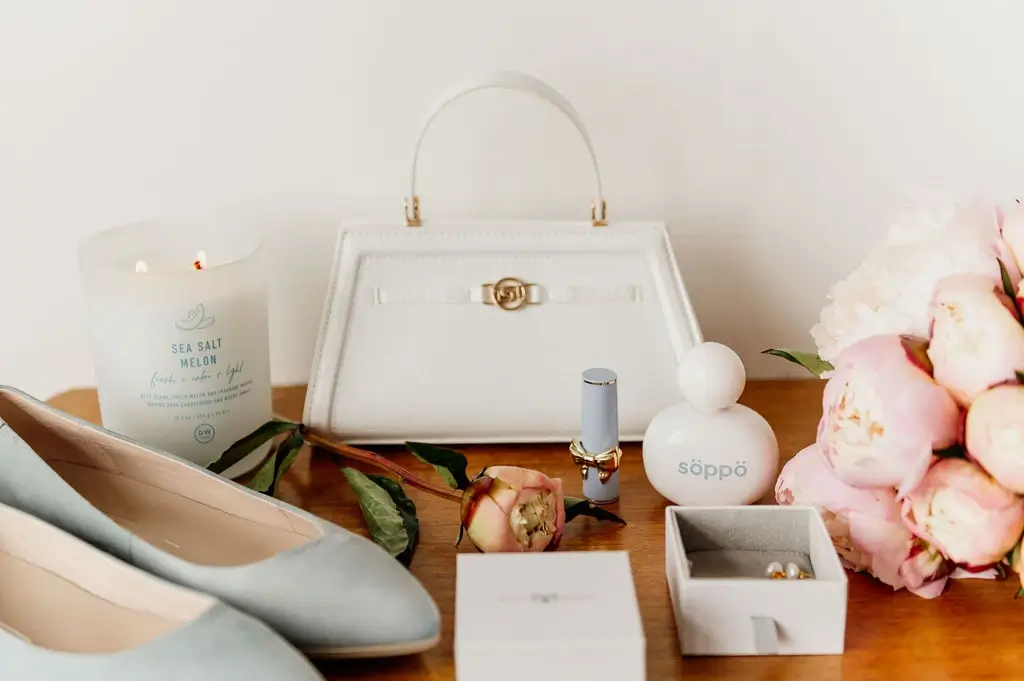
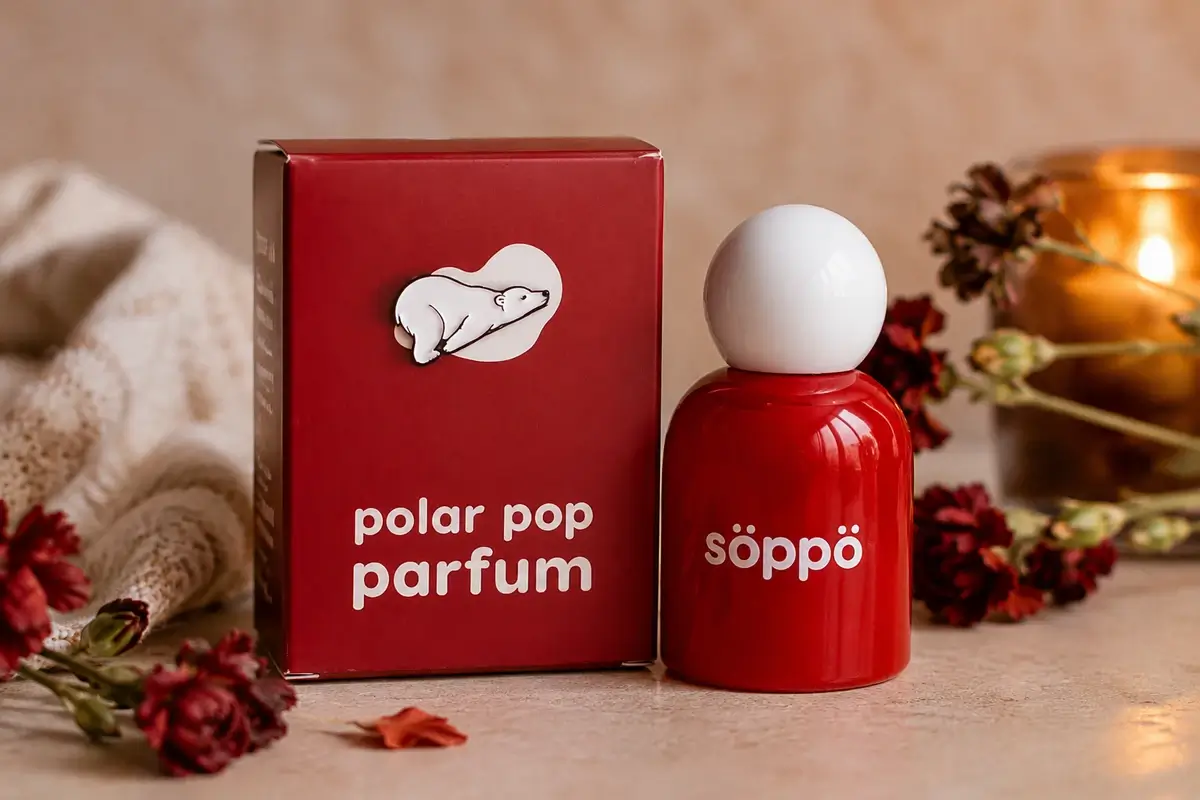
At Söppö, we often speak of perfumes as memory capsules. Not because everyone has to smell exactly the same thing in them. Rather because a scent can touch something deeply personal, even if at first we do not know how to name it.
How does the brain know what to link a scent with?
Our olfactory associations do not come from nowhere. We learn them throughout our lives - most often completely unconsciously.
If a certain scent appears in a specific context for years, the brain starts connecting one to the other. Not because someone told it: „this is the scent of purity”, „this is the scent of home”, „this is the scent of holidays”. Rather because it smelled it many times in similar situations.
This is how a private dictionary of scents is built.
To one person, citruses might mean freshness, lemonade, and an orange peel being peeled at the kitchen table. To another - dishwashing liquid. To one person, coconut might mean holidays, sun-warmed skin, and after-beach lotion. To another, something suffocating, cheap, or overly sweet. Someone will smell elegance in powdery notes, and someone else their mother's makeup bag or a locker room after a PE class.
And this is precisely why scents are so difficult to standardize. We do not learn them from one, shared manual. We learn them from apartments, bathrooms, schools, holidays, people, cosmetics, detergents, shops, travels, and all the little places where our lives truly happened.
Over time, an association can become stronger than the note itself. Then we no longer just smell „citrus”, „lavender”, or „musk”. We smell what our brain has learned to connect them with.
Will a perfume review tell you if it is the scent for you?
That is why perfume reviews are a great inspiration, but they should not be a verdict? They can suggest the direction of a scent, its vibe, and initial associations. Whether the composition leans more towards sweetness, freshness, powder, fruit, purity, creaminess, or something weirder and less obvious. But this is still part of a highly subjective scent perception. When someone writes that a scent is „chemical”, „artificial”, „wonderful”, „realistic”, „enveloping”, or „clean”, they are telling the truth about their perception. Except that this perception passed through their nose, memory, experiences, mood, and private dictionary of associations.
There are also things that seem more objective: longevity, projection, sillage, scent trail, intensity. Reviews can help a lot here, especially if many people say similar things. But even these parameters are not completely disconnected from the person testing the fragrance. How long and how strongly perfumes smell can be influenced by skin, its hydration level, sebum amount, pH, body temperature, microbiome, and even the conditions in which the scent was tested: weather, humidity, season, clothing, number of sprays, or whether the perfumes were checked on a blotter or on skin, in autumn or summer, in a humidified or dry room, on a sunny or windy day.
That is why one person might smell a fragrance all day long, while another may feel it has almost disappeared after a few hours. For one, perfumes might be soft and intimate, for another sharper, louder, or drier. This does not always mean someone is exaggerating. Often, it simply means that the scent behaved differently in a different context.
Reviews can be a map, but they are not the journey itself. That is why it is best to treat them as an invitation to test a fragrance, and not as a definitive answer. Because only your skin, your nose, your memories, and your private dictionary of associations will show what this scent will become for you.
We will talk more extensively about whether perfume reviews really help in choosing a fragrance in a separate post.
Can a scent „change”?
Sometimes we have the impression that a scent has changed. It used to smell fresh and natural, and today it suddenly seems more artificial. It used to be soft and pleasant, and now it irritates. We used to not smell any specific note in it, and after a while we start catching something we did not notice at all before.
And sometimes a scent genuinely can behave differently - for example, on different skin, in different weather, a few hours after application, or when the lighter ingredients evaporate and the heavier ones remain.
But very often it is not the scent itself that changes, but our interpretation.
Odor molecules can be the same, but the way we perceive them can shift over time. If a similar aroma appears in new contexts for years, the brain starts attributing new meanings to it. A scent that was once associated with elegance may begin to resemble a cosmetic, detergent, or a specific product we frequently encountered later. This does not have to be a „spoilage” of the scent. Sometimes it is simply a change in the story we have written around it.
Our mood and the moment we smell the perfumes also matter. We perceive a scent differently when we are calm, and differently when we are tired, overstimulated, or having a worse day. The exact same scent might seem soothing one time, and overly intense another. Nostalgic one time, and overwhelming another.
Our nose changes too. The more we smell, compare, and learn about fragrances, the easier we start recognizing specific notes. Something that used to be just „nice and creamy” can become more readable to us over time: vanilla, musk, powder, almond, milkiness, wood. Sometimes we discover a molecule or an accord and suddenly start smelling it everywhere. Not because it was not there before. We just did not have a name for it yet.
That is why a scent can change for us, even if it remains the same in the bottle.
It is not always the perfumes that are different. Sometimes we are different - with new experience, a new association, a different day, and a slightly more sensitive nose.
A brief truth to finish
There is no single, objective way to perceive a scent. Each of us smells it through our own body, nose, memory, emotions, experiences, and associations collected throughout our lives. That is why two people can smell the exact same perfumes and say something completely different about them. One: „fresh, natural, beautiful”. A second: „sharp, artificial, not for me”. And both reactions can be true.
That is exactly what is most interesting about perfumes.
That is why it is worth listening to reviews, opinions, and descriptions, but in the end, it is best to return to yourself. If a scent is beautiful, moving, pleasant to you, or simply yours - that is enough. It does not have to be that way for everyone. And conversely: if something that others love smells too sharp, too artificial, or simply unpleasant to you, that is okay too. It does not mean you do not know anything. It means your nose is telling a different story.
So perhaps sometimes it is not the scent that is the problem - but the story we carry within it.