
Fragrances don't always want to conform to the calendar either.
You can be wearing a sweater and still crave something juicy, fresh, and full of summer. For perfumes, which do not try to pretend it's autumn just because it got a few degrees cooler. Sometimes that is exactly when such an aroma becomes the most interesting. It is no longer an obvious addition to a hot day. It starts to act like a small fragment of the previous season that stayed with us a bit longer.
And perhaps that is exactly why watermelon fits this role so well.
How does watermelon actually smell in perfumes?
Watermelon has an interesting problem: everyone knows how it should smell, but it is not easy to capture its character in a single word.
It is sweet, but not like vanilla or caramel. Fruity, but completely differently than cherry, peach, or a ripe plum. The most important thing is probably that, besides sweetness, it gives an immense impression of water. The ripe red flesh is juicy, light, and almost cool. That is exactly why the aroma of watermelon can give an impression of freshness even when the fruit itself is very ripe.
In perfumes, this contrast can be recreated in many ways. Some compositions take watermelon in a more candy-like direction, others emphasize its watery character. It can appear alongside lemon, mandarin, or kiwi and become even more fruity. When paired with jasmine, rose, magnolia, violet, or lily of the valley, it can transition into a more floral interpretation. Musk, cedar, amber, patchouli, or sandalwood can instead build a deeper background for it.
However, each such combination tells a slightly different story.
Watermelon itself is most interesting precisely in its simplicity: a bit sweet, very juicy, fresh, and straightforward. It does not smell like a watermelon dessert. Instead, it should evoke that moment when a knife cuts through the thick green rind, the flesh cracks slightly, and juice immediately appears on the cutting board.
Melon can evoke similar associations, but the two profiles are not identical. We often perceive melon as softer, fuller, and sweeter. Watermelon gives more of an impression of coolness, water, and crispness. It is exactly this lightness that makes us connect it so naturally with warm days.
Why does the scent of watermelon so easily become the scent of summer?
It is not just about the aroma itself.
When we think about watermelon, a whole scene usually appears around it. The middle of a scorching day. An open fridge. A piece definitely too big to eat without getting your hands dirty. Juice running down your fingers. A table in the garden, a picnic, a balcony, a beach, or a kitchen where someone has just cut the fruit in half.
The scent then quickly stops being a single stimulus. It becomes part of the moment.
This exact way of looking at perfumes is close to us. The brand develops the idea of fragrances as memory capsules: an aroma can evoke a place, a person, or an atmosphere, but it can also become tied to a new experience and only acquire personal meaning over time.
That is why there is no single universal memory of the watermelon scent. For one person, it will be holidays by the water. For another, their grandparents' plot of land. Someone will remember summer evenings with friends, and someone else a huge bowl of sliced fruit standing during a family dinner.
Watermelon is just the beginning. Memory writes the rest.
And that is exactly why watermelon perfumes can stay with us also when summer is already ending. They do not have to recreate the temperature outside the window. They can recall the atmosphere of the moment that we have associated with a specific scent.
Do fresh perfumes need to be put away with the end of summer?
The division into summer, autumn, or winter perfumes is sometimes helpful. However, it is not an instruction manual for a fragrance.
There are indeed notes that we particularly willingly associate with specific months. Lemon, juicy fruits, or fresh flowers bring sunny days to mind. In autumn, compositions with amber, patchouli, musk, cedar, vetiver, or sandalwood appear more often. In winter, heavier gourmands and spices are added, for example, clove.
These are aesthetic associations, however, not prohibitions.
What is more, temperature does indeed change the way we perceive perfumes - and it is not just about their technical behavior on the skin or in space. In the heat, a composition can develop faster and project more clearly, spreading around the skin, whereas in cooler conditions, the same scent can behave calmer and closer to the body.
However, the very impression of the scent changes too. The same note can seem juicier, more radiant, and refreshing on a hot day, and in a cooler environment — calmer, softer, and sometimes even slightly different in perception. Not because the perfume suddenly becomes a different composition, but because wearing conditions affect which aspects of the fragrance we pick up the most strongly and what we associate them with.
This means that watermelon worn in July and the same watermelon used in October will not necessarily give us an identical experience. In summer, its watery freshness harmonizes with the hot air. In autumn, it starts acting on the principle of contrast. Among thicker clothes, a cool morning, and increasingly shorter days, something juicy and bright suddenly appears.
You do not have to immediately cover it with heavier notes so that it „fits the season”. You can just let it smell like watermelon.
Thirst Trap – watermelon that doesn't want to be anything else
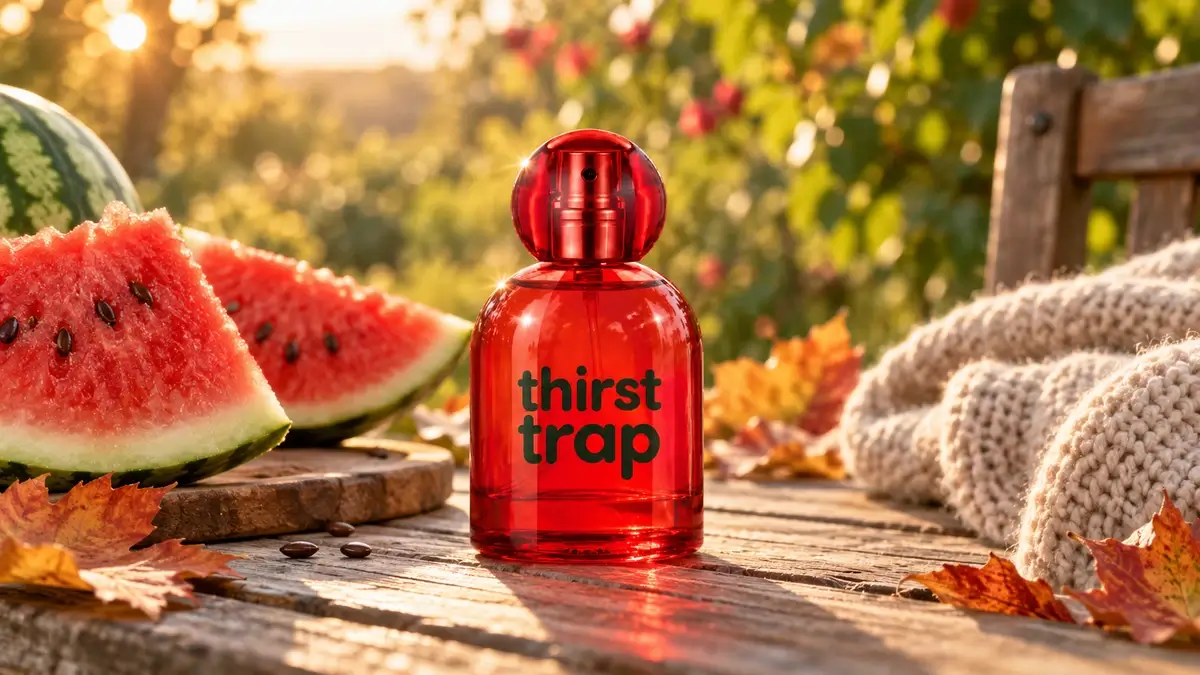
And this is exactly the idea behind the watermelon-scented Thirst Trap perfumes by Söppö.
There is no basket of tropical fruits here, where you have to wonder whether you still smell watermelon, or already melon, kiwi, or citrus. Thirst Trap belongs to Söppö monoperfumes and remains focused on one legible theme: a ripe, juice-filled watermelon. In the fragrance pyramid, watermelon appears in the top notes, as well as the heart and base.
This, by the way, shows well what monoperfumes are. It is not about a „simpler version” of classic perfumes. Their task is to showcase a specific note or accord as clearly as possible. They allow us to check if we really like exactly this kind of scent before we start looking for it among a dozen other elements of a composition.
Thirst Trap was conceived as the scent of a very specific moment: heated skin, a hot day, and cold watermelon cracking under a knife before the juice starts running down your hands. It is fresh, sweet, and juicy, but above all focused on the impression of ripe red flesh, rather than a dessert interpretation of watermelon.
And that is actually where you can stop. Watermelon does not need many decorations here.
And what if you feel like changing its character in autumn?
Not everyone will want to wear exactly the same fragrance in the same form all year round. And this is exactly where monoperfumes offer an interesting possibility: instead of putting the bottle away until next summer, you can treat it as one piece of a larger puzzle.
Layering allows you to see what will happen to the watermelon note when it meets something completely different.
If you care about a sharper, greener contrast, watermelon can be paired with rhubarb. In the Söppö collection, this direction is represented by rhubarb-scented Tangy Tankie. Its tartness can change the way watermelon's sweetness is perceived, without leading the composition towards heavy notes.
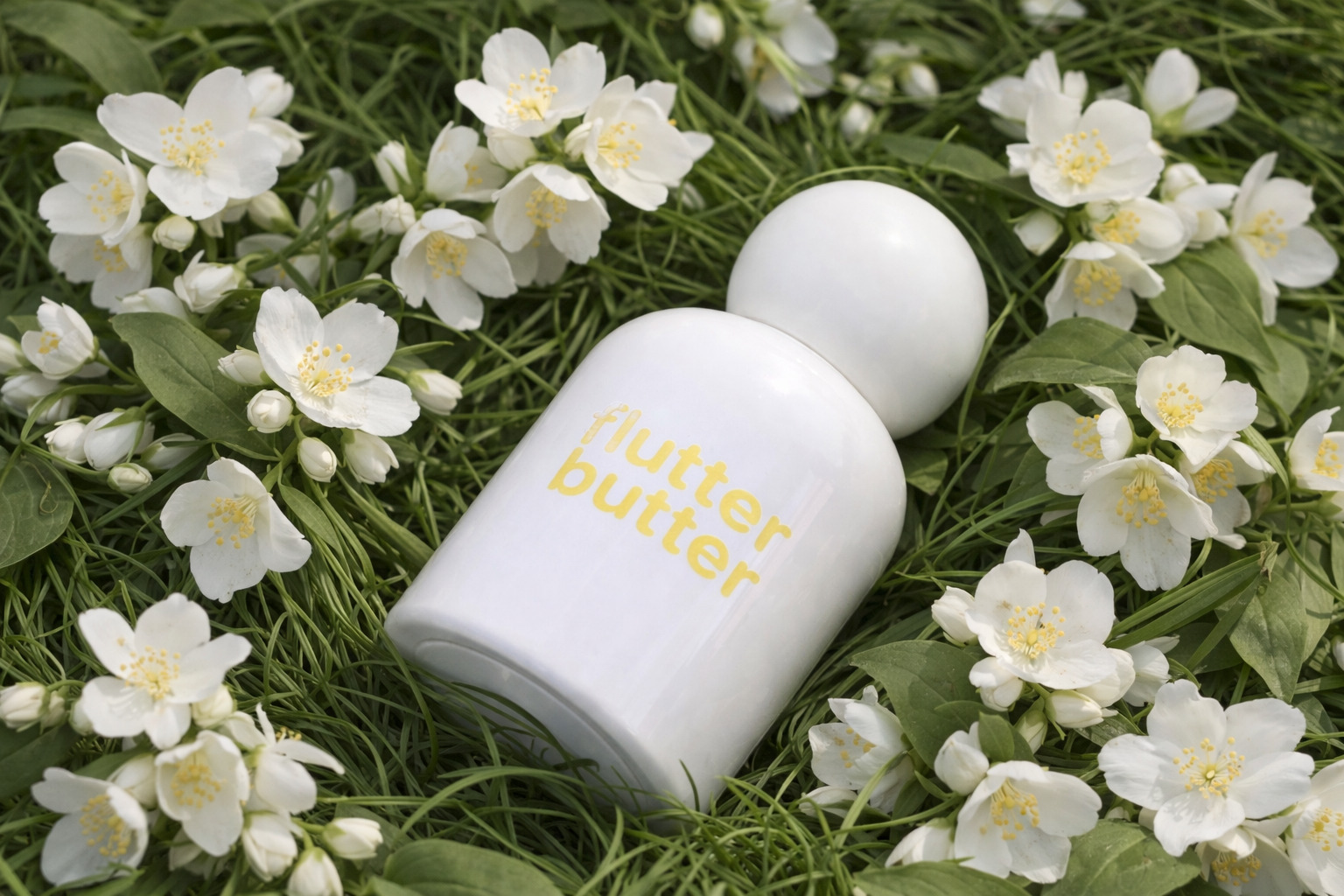
Flowers will act differently. Jasmine-scented Flutter Butter can shift the fruity character in a more floral direction. However, if you are in the mood for something more enveloping and unusual, it is worth reaching for layering Thirst Trap with Wooly Wolf. This combination gives a very interesting effect - watermelon does not lose its juiciness, but gains a deeper, softer background that can evoke the association of watermelon dipped in chocolate. This pairing is more sensual, fuller, and perfectly shows how much one additional scent can change the perception of the same leading note.
You can also go in the opposite direction. Musk can soften the fruity impression, cedar give it more dryness, and sandalwood create a warmer, creamy-woody background. Pink pepper, on the other hand, can introduce a fresh, slightly spicy accent.
This is not about a recipe for „autumn watermelon perfumes”. It is much more interesting to observe the dependencies. What happens to a juicy fruit next to a flower? How is it changed by a dry woody accord? How much of the second note is needed before watermelon stops being the center of the composition?
This is exactly what layering is based on: not only mixing perfumes, but also discovering your own taste and checking how individual notes affect each other. If you want to experiment with ready-made combinations, you can also look into Söppö layering sets.
You can also do nothing. If watermelon solo still gives you exactly what you are looking for, it does not need an autumn metamorphosis.
Women's, men's perfumes, or simply ones you like?
Fruity notes are still sometimes automatically assigned to the women's perfume category, while woody, aromatic, or more dry compositions more often fall under the „men's perfumes” label.
The nose itself, however, knows no such shelves. Watermelon can appeal to a person looking for sweetness, someone who values fresh scents the most, or someone who usually chooses completely different compositions and simply feels like trying something new.
We treat the division into women's and men's perfumes rather as an aid in navigating the offer than a rule determining who should wear a specific note.
Therefore, the best match does not have to result from gender, season, or even what perfumes usually stand on your shelf. Sometimes the simplest criterion is the answer to one question: do I want to smell like this?
The last piece of summer doesn't have to be the last
In autumn, it is easy to fall into automatism. Clothes, food, light, and the rhythm of the day change, so we also change perfumes. We hide fresh compositions deeper, and amber, musk, patchouli, vanilla, and wood appear in their place.
There is nothing wrong with that. Warm, enveloping scents can be exactly what we crave when it gets cooler.
But sometimes it is the opposite. Sometimes the first really cold morning evokes a craving for something that does not fit it at all exactly for that reason. For flowers. For lemon. For a juicy fruit. For the scent of watermelon and the memory of the warm sun, even if it is already starting to rain outside.
And then perfumes cease to be an accessory tailored to the season. They start acting more personally.
They don't say: „it's autumn”.
They say: „remember summer?”.
From the author
I like the moment between seasons. The one when practically nothing is obvious anymore. In the morning you put on a sweater, in the afternoon you are too hot in it. You buy the first pumpkin, but in the fridge you still have fruits that just a moment ago meant the middle of holidays.
I feel similarly about fragrances.
I do not really believe in a day when I should officially say goodbye to one perfume and take out the next. I am more interested in what I feel like wearing right now. Sometimes in September it will be something warmer. At other times, quite the opposite – a scent that resembles the most shamelessly summery thing imaginable.
Watermelon is great for this.
Because if a scent can truly store pieces of our memories, I see no reason to open this capsule exclusively in the appropriate month.
Summer may end.
The craving for one more piece doesn't have to.
FAQ – watermelon-scented perfumes
Are watermelon perfumes very sweet?
They don't have to be. The scent of watermelon combines the natural sweetness of a ripe fruit with watery freshness, which is why it can be light, juicy, and refreshing instead of dessert-like. Some watermelon-scented perfumes take this note in a more candy-like direction, others focus on a subtle impression of coolness and freshness. In Thirst Trap, the character of ripe, juice-filled red flesh remains the most important.
Are watermelon perfumes ideal only for summer days?
No. Summer days are a natural context for this note, because the freshness of watermelon harmonizes well with the heat and sun, but it does not mean that you have to put the bottle away with the arrival of autumn. In cooler conditions, the scent can resonate calmer and more subtly. If you crave a fresh aroma in October, watermelon perfumes can be just as good a choice as compositions associated with autumn.
Are watermelon-scented perfumes suitable for an evening out?
Yes, if this is exactly the profile that suits you on a given day. An evening out does not automatically require heavy, very intense perfumes. A fresh, fruity scent can be an interesting contrast, especially if you do not want the perfume to dominate the entire surroundings. The choice depends more on your preferences and personality than on a rigid division into daytime and evening fragrances.
Is Thirst Trap a perfume for women or men?
The watermelon note is not assigned to one gender. Both women and men can reach for watermelon perfumes if their fresh and juicy character suits them. Söppö treats the categories of women's and men's perfumes as a help in navigating the offer, not as a rule. A scent can be an element of your personality, but it doesn't have to fulfill a stereotype assigned to a gender.
Is perfume extract the same as eau de toilette or eau de cologne?
No. Eau de cologne, eau de toilette, eau de parfum, and perfume extract (parfum/extrait de parfum) are terms referring to different levels of concentration of a fragrance composition. Thirst Trap has a 30% fragrance concentration, which is why it belongs to the perfume extract category. However, this does not automatically mean that its fresh, watermelon character becomes heavy – concentration and fragrance profile are two different matters.
What can you combine the scent of watermelon with?
In layering, watermelon gives plenty of possibilities. You can pair it with tart rhubarb, fresh citrus, or flowers such as jasmine or iris. Another direction is musk or delicate woody notes, which change the character of the composition without having to give up its fruity center. There is no single combination that will be a perfect choice for everyone – it is worth testing the proportions on your own skin and observing which accords suit your senses best.
For whom can watermelon-scented perfumes be a good choice?
First of all, for people who like fresh, juicy compositions and fruity aromas without heavy, dessert-like sweetness. They may also appeal to people who look for energy, lightness, and a legible leading note in perfumes. However, you do not have to treat them as „perfect perfumes for a specific type of person”. The most important thing is whether exactly this scent gives you pleasure.