
Jasmine that wakes up after dusk
There are flowers that smell most beautiful in full sun. And there are those that wait for silence. Jasmine is not in a hurry with its story. Its scent doesn't explode at noon, it doesn't compete with the hot air or the intensity of the day. It wakes up when the world slows down – when conversations become quieter, the light softens, and the skin begins to absorb the night.
In the garden after dusk, the scent of jasmine thickens. It becomes more noticeable, more present. It's not an intrusive intensity, but something more subtle – like a whisper you hear more clearly when everything around goes silent. This natural characteristic of the plant makes jasmine recognized for years as one of the most magnetic fragrance notes in the perfume world.
Luminous, and at the same time mysterious. Floral, but far from banal sweetness. On the one hand, it carries the freshness and lightness of white petals, on the other – a sensuality that can envelop the skin for long hours. It is exactly this duality that makes perfumes with jasmine find themselves so well in evening compositions. They don't scream. They don't dominate the space. They build an aura.
At Söppö, we look at jasmine as a scent that needs no decoration. It only needs the night, the warmth of the skin, and a moment of mindfulness. That's when it truly begins to „sound”.
Grandiflorum jasmine and sambac jasmine
Although we simply say „jasmine”, in perfumery this flower has several faces. Two of them are particularly valued: grandiflorum jasmine (Jasminum grandiflorum) and sambac jasmine. Each of them brings a slightly different shade of emotion to the fragrance composition.
Grandiflorum jasmine smells greener and fresher. It has a subtle, almost tea-like transparency that gives compositions a floral lightness. It is elegant, harmonious, often used in classic, balanced perfumes.
Sambac jasmine is creamier and more sensual. Its aroma can be slightly sweet, denser, closer to the body. It is the one that more often builds the nocturnal, intimate character of the scent. In its structure, you can sense something almost velvety – like the warmth of skin after sunset.
Extracting the scent of jasmine is a process requiring immense patience. The flowers are hand-picked, often at dawn, before they have a chance to fully open. To obtain one kilogram of jasmine oil takes thousands, or even millions, of delicate flowers. This makes jasmine one of the most noble raw materials in the perfume world.
In the past, the method used to extract the aroma was through fat extraction (enfleurage) – petals were placed on a layer of fat, which slowly absorbed their scent. Today, modern extraction with solvents is more commonly used, allowing the depth and multidimensionality of the aroma to be preserved.
That is exactly why the scent of jasmine is so complex. It is not a one-dimensional, simple accord. At one moment it can seem fresh and luminous, in the next – intense and almost sensual. It combines the delicacy of petals with the natural intensity of a plant that blooms at night.
And perhaps that is exactly why for decades it has remained one of the most recognizable scents in perfumery – a flower that doesn't need exaggeration to be remembered.
The scent of jasmine as a heart note
In the classic structure of perfumes, there are three levels: top, heart, and base notes. It is exactly the heart note that determines the character of the composition – it appears a moment after the first spray and accompanies the skin for a longer time. In the case of many floral fragrance compositions, it is exactly the note of jasmine that builds this central, most emotional point.
Top notes – such as bergamot, mandarins, or a blackcurrant accord – open the scent with freshness and lightness. They are like the first light before sunset. However, it is the heart that sets the tone for the entire story. When the volatile molecules disappear, jasmine begins to resonate more fully, warmer, more intimately.
It is the one that connects the fresh beginning with a deeper base composed of cedar, sandalwood, amber, or vanilla. Thanks to this ability to harmonize different layers, jasmine has become one of the foundations in the perfume world. Without it, many compositions would only be a momentary flash – with it, they gain structure and emotional continuity.
What does jasmine pair most beautifully with?
Jasmine has an extraordinary ability to adapt to the company of other fragrance notes. In classic, floral compositions, it connects with rose, magnolia, or freesia, creating a full, elegant bouquet of flowers. Such a floral scent is harmonious and luminous, but not overwhelming.
When combined with ylang ylang, jasmine gains a more exotic, creamy dimension. In turn, in a duet with neroli or orange blossom, it becomes fresh, almost radiant – like a garden at dusk, when the air is still warm, but already calm.
However, it reveals its most evening character in combination with woody notes. Cedar and sandalwood give it depth and balanced elegance. Vanilla and amber add softness and a subtle sweetness that envelops the skin instead of dominating it.
It is exactly this ability to build a bridge between freshness and intensity that makes jasmine work so perfectly in perfumes designed for evening outings. It doesn't have to be loud to be present. It is enough that it is well embedded in the composition – then its scent develops slowly, layer by layer, like a night in a garden.
Plant biology – a scent that wakes up at night
Jasmine is one of those plants that naturally intensify their aroma after dusk. In the warm, night air, its scent becomes fuller, more noticeable, almost dense. This is no accident – many varieties of jasmine attract pollinators exactly at night, which is why it releases the most aromatic molecules then.
This biological trait means that the scent of jasmine has something organically connected to the night. During the day, it may seem subtle, but when the skin temperature rises, and the air becomes warmer and calmer, its intensity grows. In perfumes, this effect translates into a more distinct, enveloping resonance.
In the evening, jasmine doesn't fight for attention. It attracts it.
Psychology of scent – intimacy and sensuality
The perception of a scent changes with the time of day. During the day, we are surrounded by hundreds of stimuli – light, sounds, conversations, movement. In the evening, everything slows down. The senses sharpen to details. What was previously the background becomes clearer.
Jasmine finds itself perfectly in this space. It is sensual, but not heavy. Intense, yet devoid of aggression. It builds an aura of closeness – one that is sensed only by people standing closer. This is exactly why perfumes with jasmine will work perfectly for evening outings and special occasions, when the scent is supposed to be part of the mood, and not its center.
On cooler days, its warm, creamy face becomes more expressive. In the heat – it softly spreads over the skin, creating an elegant scent with a balanced projection.
Jasmine doesn't need a sharp contrast. Its strength is the tension between light and shadow – between floral lightness and sensual depth. And that is exactly why it „sounds” best when the light goes out and the night begins.
Jasmine in Söppö's interpretation – Flutter Butter
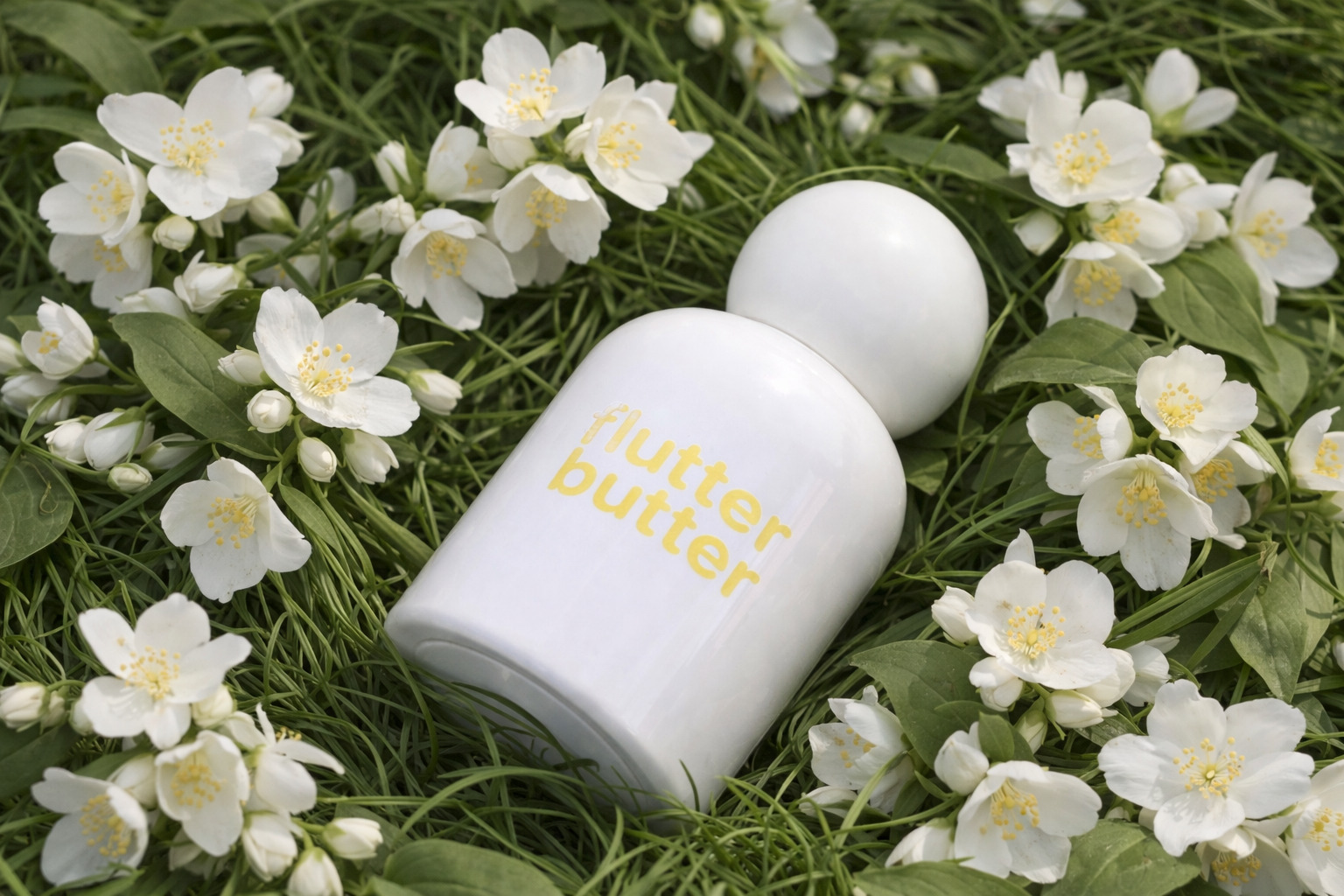
At Söppö, jasmine is not just an addition to the composition. It is its heart and beginning. Flutter Butter is a perfume built around the scent of jasmine – without an excess of ornaments, without covering it with a heavy base. It is an attempt to capture the moment when the night is just beginning, and the air becomes soft.
In this interpretation, jasmine is neither overly sweetened nor excessively powdery. It retains its natural luminosity, but develops in a more sensual direction when it touches the skin. The first impression is clean and floral. After a moment, depth appears – warm, slightly creamy, close to the body.
Flutter Butter is a perfume extract with a 30% concentration, which makes the scent develop slowly and have distinct longevity. It doesn't explode. It blooms. Like jasmine in a garden at night – it needs a moment to fully show its intensity.
In a world where many compositions are built from dozens of notes, this interpretation emphasizes focus. One note, one motif, one story. Thanks to this, the scent is clear, but not banal. Linearity here does not mean flatness – it means consistency.
Evening character
This is a perfume created with dusk in mind. During the day, they can be subtle, almost ethereal. However, when the skin temperature rises and the senses quiet down, their scent gains depth. Jasmine becomes more present, more sensual.
Flutter Butter doesn't build a large projection. It stays closer to the skin. It creates an aura that is sensed in movement – when the air gently shifts, when someone steps a pace closer. It is an elegant scent without ostentation.
How to wear jasmine perfumes?
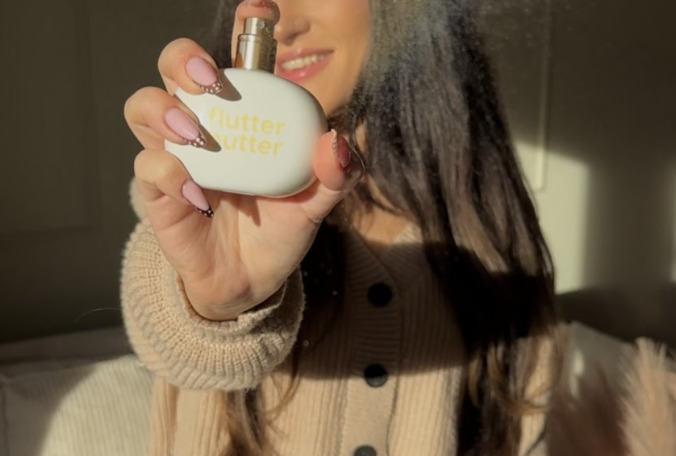
The scent of jasmine doesn't need excess. A few thoughtful applications are enough for it to fully develop its character. Especially in the case of a perfume extract like Flutter Butter, less truly means more.
Where to apply?
Best in places where the skin is warmer – on the wrists, the crooks of the elbows, at the base of the neck, or on the nape. Body heat helps fragrance notes naturally develop. Over the course of the evening, jasmine will gradually reveal its depth, instead of immediately showing its full intensity.
It is worth avoiding rubbing the wrists after application. Friction accelerates the evaporation of volatile molecules and can flatten the development of the composition. It is better to let the scent „settle” and work at its own pace.
Jasmine solo or in a duet?
Jasmine perfumes can be worn on their own – especially if they are built around a single note, like Flutter Butter. Such a scent is cohesive and consistent from the first to the last moment.
However, if you like experimenting, jasmine finds itself well in layering. You can combine it with a subtle base of woody notes, like cedar or sandalwood, to emphasize the evening character. During the day, an interesting contrast will be a light layer of fresh citrus – bergamot or mandarins will add more air to the scent.
An interesting direction is also combining jasmine with linden. It is a floral combination, but embedded in a natural, „woody” aura – it smells not so much of the flower itself, but of the entire tree in full bloom. Linden brings softness and a honeyed lightness, jasmine adds sensuality, and the whole creates a very harmonious, non-obvious duet on the borderline of flowers and nature.
Jasmine also connects surprisingly well with non-obvious notes, such as bubblegum. In such a duet, the sweetness becomes softer and more nostalgic, it loses its literal, childish bluntness, and jasmine – although still feminine – takes on a more girlish, playful tone. The scent becomes carefree, light, and pleasantly reminiscent.
A natural direction is also floral combinations. Jasmine and lilac-scented perfumes together create the effect of a fresh bouquet straight from the florist – romantic, sensual, and at the same time bright and luminous. It is layering that gives a very harmonious result and works great both on its own and as a base for further floral experiments.
Jasmine monoperfumes can also be combined with classic perfumes in which jasmine plays an important role – for example, with iconic, bright floral compositions known from designer perfumeries. Such layering is not aimed at replacing the scent, but at extracting and emphasizing a specific accord that already exists in it.
A good example are scents in which jasmine constitutes one of the main pillars of the composition, such as Chanel Gabrielle, Dior J’adore, or Gucci Bloom. Adding a pure jasmine monoperfume allows to strengthen their luminous, floral aspect, making jasmine more noticeable, fresh, and spatial, without disrupting the character of the original composition.
Time of day and temperature
Jasmine reacts to heat. At higher temperatures, its aroma becomes more expressive, and the floral lightness turns into sensual softness. On cooler days, it takes on elegance and calm depth.
In everyday use, it can be subtle, almost a skin scent. In the evening – especially during special occasions – it gains fullness. Not because it is louder. Because the surroundings allow it to be heard better.
Jasmine is a scent that doesn't have to dominate the space. It is enough that it harmoniously interacts with your movement, skin temperature, and the mood of the moment.
Frequently asked questions
1. What is the difference between sambac jasmine and grandiflorum jasmine? ▼
Grandiflorum jasmine is greener and more luminous, with a delicate, almost tea-like freshness. Sambac jasmine smells creamy and more intense – it can be slightly sweet, more sensual, and deeper. In perfumes, the choice of variety affects whether the composition will be more ethereal or more enveloping.
2. Are jasmine perfumes sweet? ▼
Not always. The scent of jasmine has a naturally floral character, but its perception depends on the entire composition. Combined with vanilla or amber, it can become warmer and softer. When paired with bergamot or neroli, it will be fresher and more radiant. Jasmine itself can balance between freshness and sensuality.
3. For which season is it best to choose perfumes with jasmine? ▼
Jasmine works perfectly all year round, however, it sounds particularly beautiful in spring and summer, and during warm, evening outings. On cooler days, its creamy face becomes more distinct and elegant. It is a scent that reacts to skin temperature.
4. Is jasmine only a feminine scent? ▼
In the perfume world, divisions are increasingly less important. Jasmine is a floral note, but its character can be both delicate and expressive. In Söppö's interpretation, we do not assign scents to gender – what is more important is how a given composition interacts with your skin and personality.
5. How long does the jasmine note last? ▼
Longevity depends on the concentration and construction of the perfume. In a high-concentration perfume extract – as in the case of Flutter Butter – the scent develops slowly and can accompany the skin for many hours. Jasmine as a heart note lasts longer than fresh top notes, and its soft presence can be felt even at the end of the day.
6. Are jasmine perfumes suitable for everyday use? ▼
Yes, if you like a floral scent with balanced projection. During the day, jasmine can be subtle and close to the skin. In the evening – especially during special occasions – it gains depth and becomes more sensual. Everything depends on the amount of application and your mood.
A story from the author
The first time I truly smelled jasmine was in a garden that didn't belong to me. It was late summer, a warm evening, and conversations at the table were slowly quieting down. Someone opened the door to the terrace and suddenly the air changed completely. The scent was soft, dense, almost tangible. It didn't dominate – it just was.
I remember thinking then that this is what courage smells like. Quiet, calm, unforced. Not the kind that enters the room first, but the kind that remains when the light dims.
When we later worked on the jasmine interpretation at Söppö, I kept returning to that moment. I wanted to capture in the bottle not only the floral scent, but also this silence between the notes. That moment of hesitation before the first step.
A jasmine garden at night doesn't need an audience. One person, the warmth of the skin, and a moment in which you allow the scent to bloom are enough.