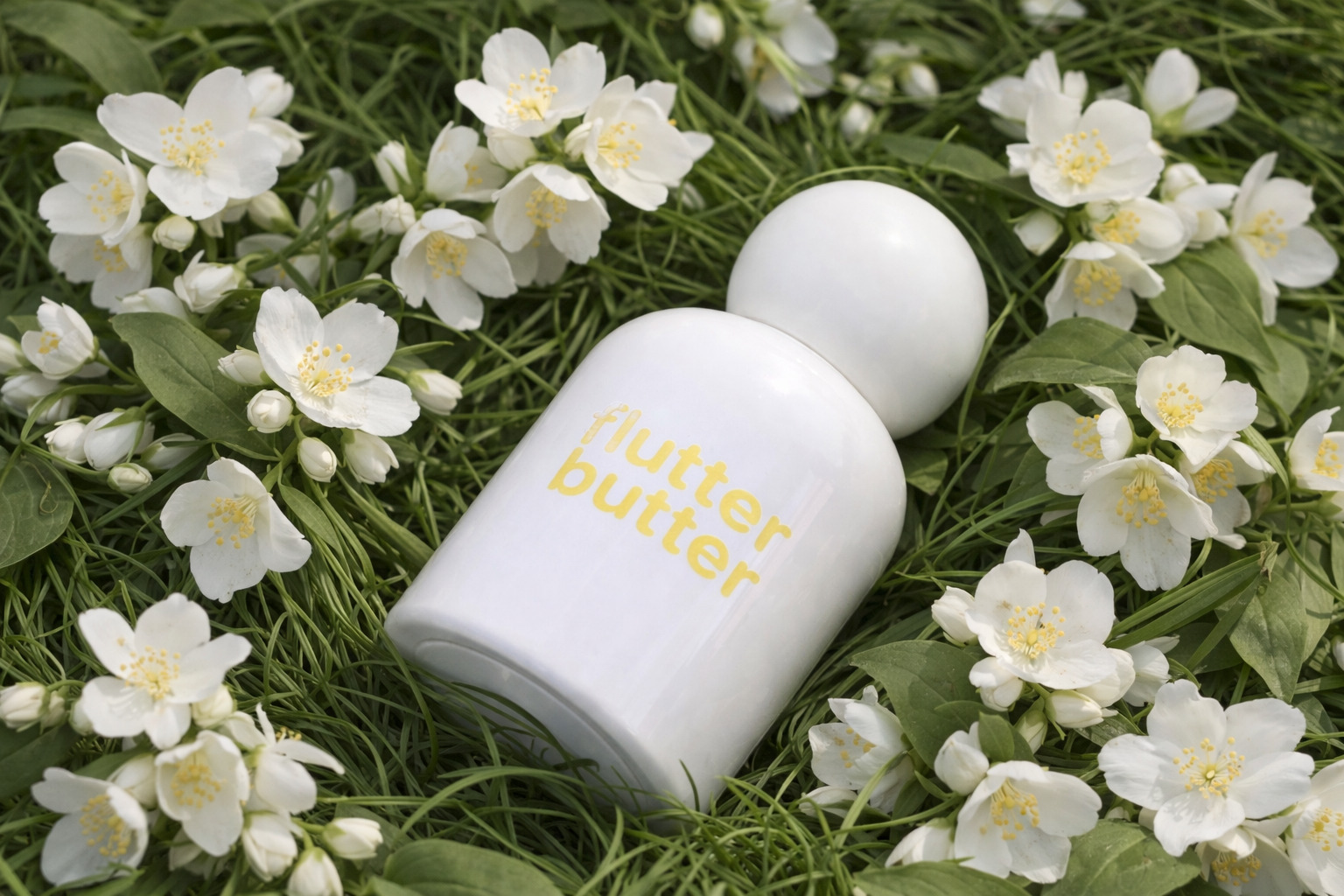

Mindfulness, which is being here and now, often sounds like something time-consuming. Like another thing to "handle". Meanwhile, it does not have to mean meditation, a change in lifestyle, or ideal conditions.
Sometimes a very simple gesture is enough - noticing what you feel in a given moment. The touch of the skin, your breath, or a scent that briefly pulls you out of your thoughts and brings you back to the here and now.
What exactly is mindfulness?
Mindfulness is the practice of presence - being here and now. Without judging and correcting. Without wondering if it "should" be different. But with full attention that allows you to notice the moment exactly as it is. It is not a state of perfect calm or an "empty head". It is not about stopping to think. It is rather about stopping for a moment to constantly be a step ahead of yourself - not analyzing yesterday and not planning tomorrow, but checking: what is happening to me at this moment?
Simply put, mindfulness means noticing:
-
how you breathe,
-
what you feel in your body,
-
how you react to stimuli such as sound, touch, temperature, or scent.
In psychology, it is said that the easiest way to return to the present moment is precisely through the body and senses. They always operate "now". They do not analyze the past and do not predict the future - they simply perceive what is in a given moment.
Therefore, mindfulness does not require ideal conditions or a specific mood. You can practice it regardless of whether you are tired, angry, calm, or joyful. In very ordinary situations - while washing your hands, going for a walk, or taking a brief moment of pause during the day.
Mindfulness is not about doing something "better". It is about being closer to yourself.
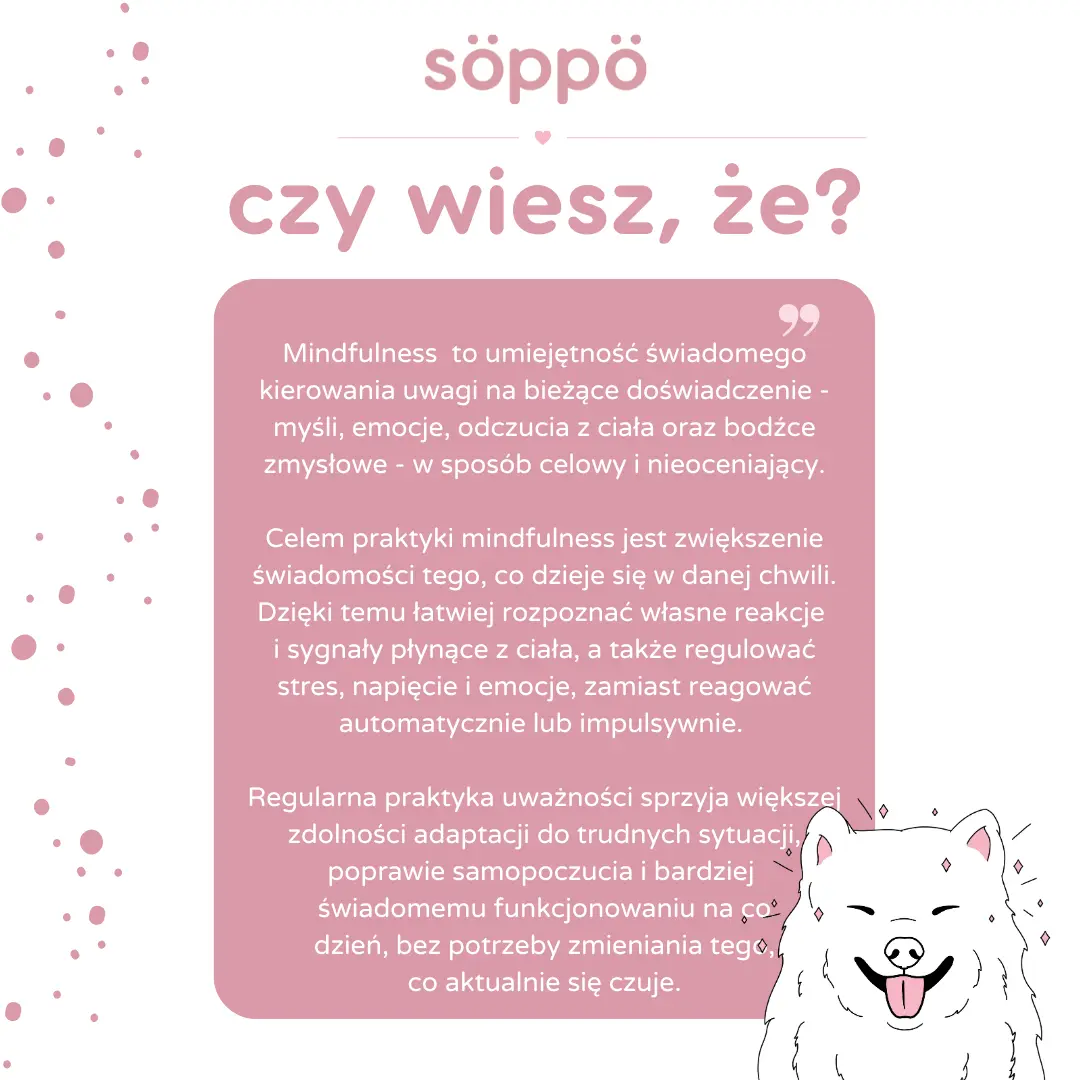
What does mindfulness provide - and why is it worth practicing?
Mindfulness is not meant to suddenly make your life calm, organized, and perfect. Its greatest value is not a "better mood", but a change in the way you exist throughout the day.
Practiced regularly, even in very simple moments, mindfulness helps to:
-
lower the level of tension and stress,
-
notice faster when the body is overloaded or tired,
-
better regulate emotions instead of suppressing or ignoring them,
-
return to balance more easily after difficult moments,
-
feel a greater connection with yourself - instead of functioning on autopilot.
This is exactly why it is said that mindfulness supports the nervous system. Studies on nervous system regulation show that consciously directing attention to the present moment promotes the activation of the parasympathetic nervous system - the one responsible for regeneration and rest. When attention returns to the present moment, the body receives a signal that it does not have to be in a constant state of readiness. The breath deepens, tension gradually decreases, and the body has space to regenerate.
Mindfulness is also significant for the body and skin - especially in the context of stress. Chronic stress is one of the main factors disrupting the body's balance - it affects sleep, immunity, and inflammatory processes, which have a direct impact on the condition of the skin. Chronic tension affects sleep, immunity, and inflammatory processes, and reducing them promotes better well-being and the natural balance of the body.
But the most important thing in mindfulness is not what it "does" to the body in the long run. The most important thing is that it gives you a moment to stop here and now - right when you need it most.
And that is exactly why it pairs so well with scent.
Why is scent the fastest path to the "here and now"?
Scent works differently from most stimuli. Olfactory information bypasses the part of the brain responsible for analysis and goes directly to the limbic system - an area associated with emotions, memory, and bodily reactions. It is the only sense whose signal reaches the brain without the mediation of the thalamus, which is why the reaction to a scent is so fast and often unconscious.
That is why a scent can trigger a memory faster than an image or a sound. Or calm the body before you have time to name or understand it. The reaction appears automatically - without effort and without decision. For this very reason, scent so effectively directs attention to the present moment. Instead of engaging thought, it immediately triggers a sensation in the body - a change in breath, tension, or emotions.
It works even when you are tired, overstimulated, or lack the energy to "focus". Scent does not require concentration or instructions. It simply appears - and the body knows how to react to it.
Perfume as a mindfulness practice (and not an accessory)
For years, perfumes have been described as something that is supposed to "smell nice", emphasize style, or make an impression. As an addition to an image. Something optional. Meanwhile, a scent can play a completely different role - it can become a simple gesture of presence.
In mindfulness, it is not about changing or improving anything. It is about noticing what is already there. Perfumes do not have to correct anything. They do not have to improve your mood or add confidence. They can just be - like a breath, like a touch, like a brief moment of silence during the day.
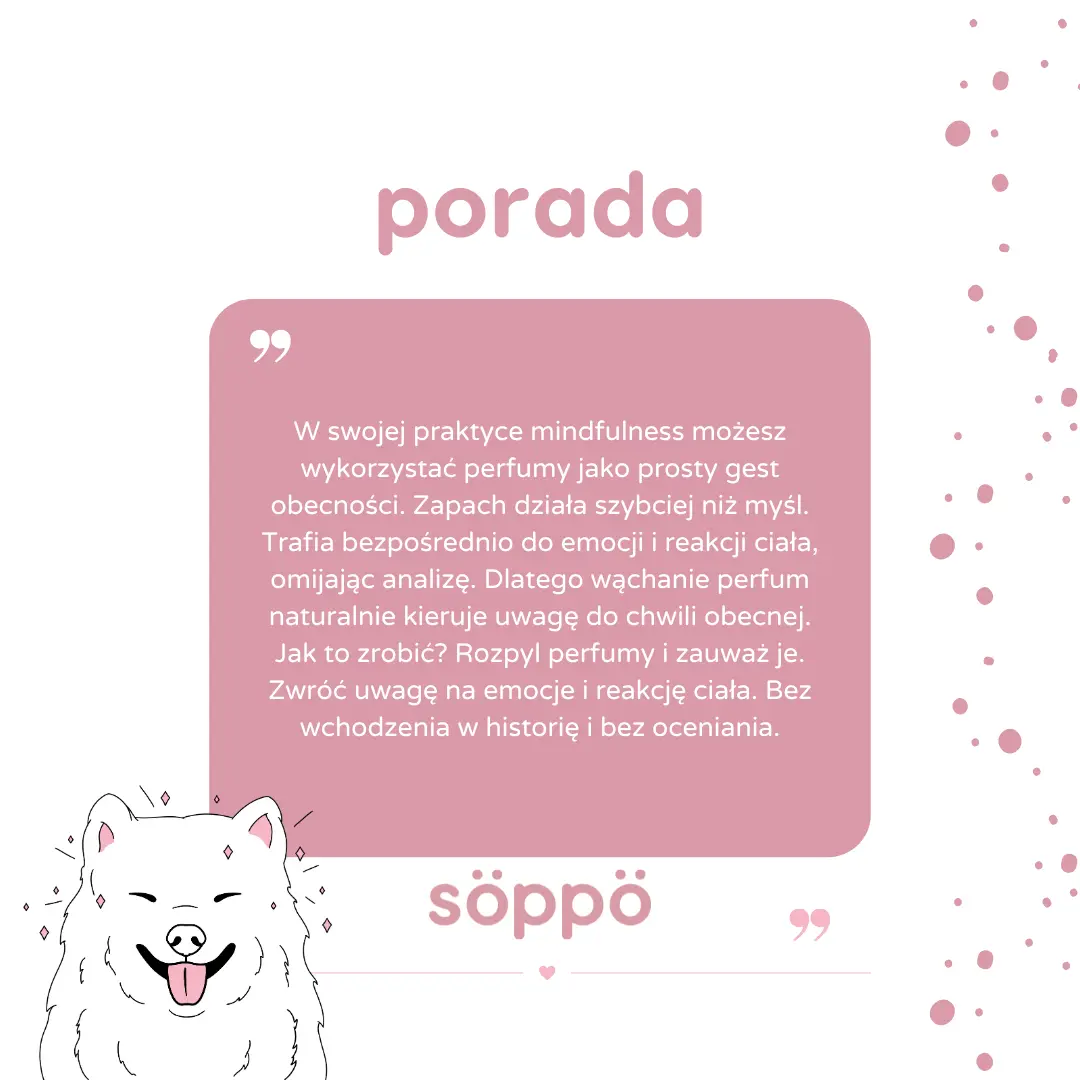
A single spritz of a scent can become a micro-practice of mindfulness. Not because it "works" in a specific way, but because it captures your attention. It directs it to the body. To a sensation. To this single moment that is happening now - without analysis and without judgment.
Used in this way, perfumes cease to be a background. They become a point of reference. A brief moment when you do not need to do or achieve anything. It is enough to notice the scent and simply let it resonate.
At Söppö, we think about perfumes exactly this way. Not as an accessory to an outfit, but as a simple ritual of presence. We design scents not to improve something, but to be truly felt - without a rush and without pressure.
Perfume as a mindfulness practice does not require instructions or a perfect moment. Sometimes a single spritz is enough. One calm breath. And brief contact with what is now.
Monoperfumes - one scent, one moment
Simplicity is key in mindfulness. The fewer stimuli, the easier it is to notice what is truly happening. And exactly from this need arise monoperfumes - scents based on a single clear motif, without an excess of notes and without olfactory "noise".
Monoperfumes, also known as mono-scents or minimalist perfumes, do not tell complicated stories. They do not change every few minutes. They do not try to surprise. Thanks to this, they are easier to notice - and it is easier to stay with them. One scent is one experience.
The lack of a multi-layered composition ensures that attention does not wander. There is no need to analyze "what has come out now". The scent is legible, present, and realistic. You can simply feel it - without interpretation and without breaking it down into parts. In mindfulness practice, this is a huge difference. Monoperfumes do not compete for attention with thoughts, stimuli, and emotions. They give you space to be in the moment. That is why they work so well when you are tired, overstimulated, or simply want to simplify the world for a moment.
At Söppö, we treat monoperfumes as a tool for mindfulness. Not because they are "easier", but because simplicity promotes presence. One scent. One moment. Without an excess of stimuli. Without the need to prove anything.
Monoperfumes are not meant to make an impression (although they can and often do, like our bestselling lilac-scented perfumes). They are meant to let you be.

What about full fragrance compositions?
Full, multi-layered compositions, perfumes are a completely different kind of experience. Richer and more complex. And therefore requiring more attention. There, the scent develops over time, changes, reveals successive layers, and invites conscious "tracking" of this process.
Therefore, we often choose full compositions when we have space, peace, and a desire for deeper focus. When we want to immerse ourselves in a scent for longer, learn to recognize it, and catch individual notes. This is a mindfulness practice on another level - more analytical, more demanding.
Monoperfumes are like one clear sentence. Compositions are like an entire story. Both have their place. Mono-scents work well when there are too many stimuli and you need a simple point of reference. Full compositions - when you want to go deeper and are ready for a more complex olfactory experience.
Therefore, for a quick mindfulness practice, we highly recommend starting with single-note and minimalist scents, which are easy to notice and do not require "training to wear". And only then - if you have the space for it - can you reach for more extensive fragrance stories.
Mindfulness is not about difficulty. It is about matching the experience to where you are in a given moment.
How to practice mindfulness with perfumes (specifically)?
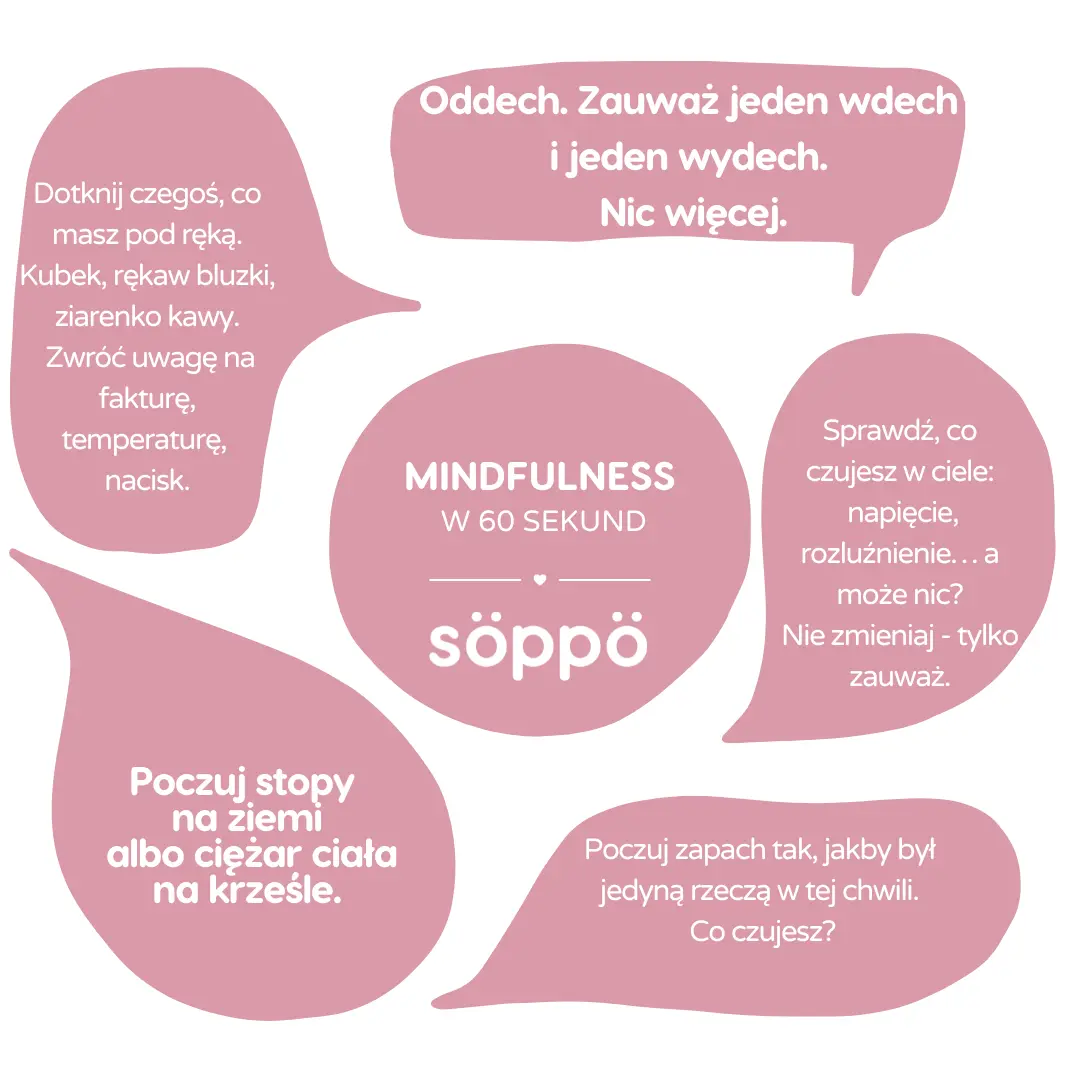
Mindfulness with scent does not require special conditions, the right perfumes, or extra time. It is not about what perfumes you choose, but about how you are with them. One conscious spritz of a scent you already have can become a simple fragrance ritual - in the morning, during the day, or in the evening.
In the morning - scent as a point of reference for the day - an "anchor"
In the morning, use perfume not to "get ready", but to pause for a moment. After applying, take one calm breath in and out before you leave the bathroom. This is a simple signal to the body: the day is starting, but it does not have to start in a rush.
During the day - a quick reset
When you feel tension or overstimulation, a scent can help you quickly return to your body. It is enough to briefly shift your attention from thoughts to the sensation of the scent. This is a quick reset that does not require stopping your day or changing plans.
In the evening - a signal to end the day - closure
In the evening, a scent can become a sign that you do not need to do or achieve anything anymore. It can become a signal of the day's end. A single spritz and a conscious decision to do nothing else for this moment. Such a habit helps the body transition from action mode to rest mode.
And what if you lack the energy for mindfulness?
There are days when the very word "practice" sounds like too much. When you do not want to stop or "do something mindfully". When you simply do not have the space or energy for it. And that is okay.
Mindfulness does not have to be pretty or perfect. It does not require silence, time, or an intention written in a calendar. Sometimes the only thing you can manage is a scent. And that is truly enough. One spritz of perfume. Without a plan and without a goal. Without the need to correct anything. Just a moment when you feel something instead of thinking.
Scent works even when you lack the energy to focus. It bypasses effort and analysis. It reaches places where you do not need to try - emotions, memories, the body. That is why it is sometimes the gentlest form of mindfulness.
You do not have to sit perfectly still.
You do not have to do it "right".
You do not have to achieve anything.
If the only thing you can do for yourself today is to smell a scent for a second - that is already a moment of presence. And that counts.
Body care as mindfulness (expanding the practice)
Scent is often the beginning. But the body likes when something lasts a little longer.
Mindful body care does not have to be a separate practice or another "item to check off". It can be a background - calm, repetitive, grounding in the body. Something that supports mindfulness when you want a little more of it than a single brief pause.
It is not about perfect skincare. It is about presence in what you are already doing.
Shower or bath - soap and bath pebbles
Water brings attention to the body very quickly. In the shower or in the bathtub, it is difficult to be completely "somewhere else" - you feel the temperature, the weight of the drops, the scent lingering in the air. Mindfulness in the bath is not about doing anything slower by force. It is enough to notice the moment when soap or gel lathers up. Or the moment when water changes color and scent after adding bath pebbles. One breath. One "I am here". It does not require focus - just presence.
Touch - brushing and moisturizing
Touch is one of the fastest tension regulators. Not because it does something spectacular, but because it reminds the body that it is noticed.
Body brushing can be short and ordinary. A few calm strokes. Without a goal. Without improving anything. Just skin contact and a simple stimulus that directs attention to the here and now.
Moisturizing the body works similarly, but differently. There are textures that naturally slow down a rush - a fluffy lotion is one of them. You cannot apply it "on the run". Your hands slow down on their own, the movement becomes soft, more present.
This is not a moment for analysis or judgment. Rather for being in a simple gesture of care. Mindfulness does not always start in the head. Sometimes it starts with the skin feeling that someone has devoted a moment to it.