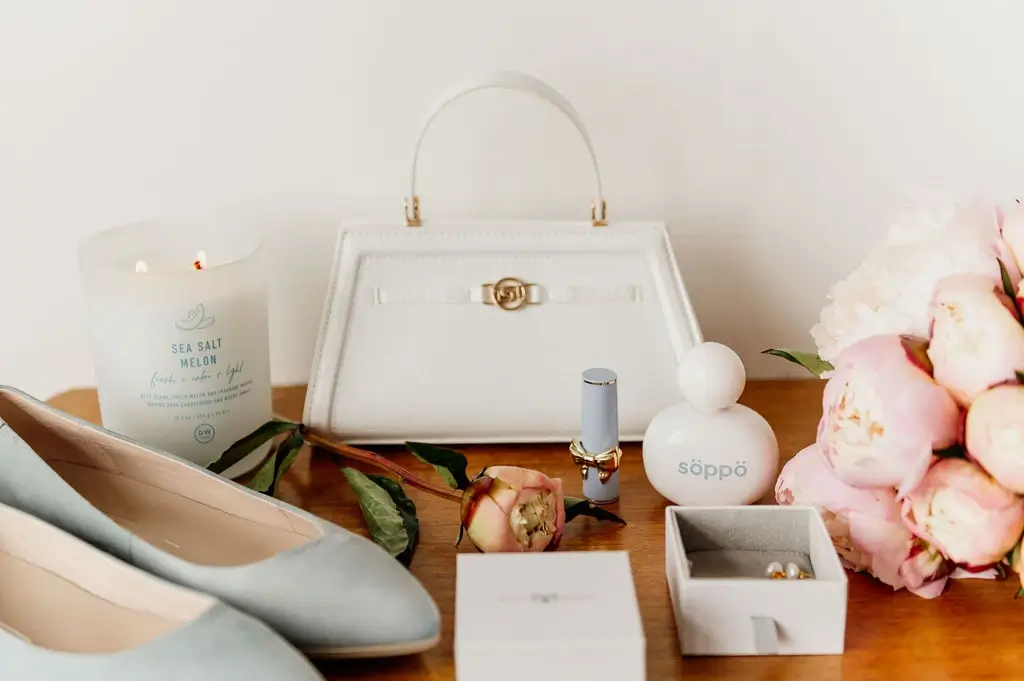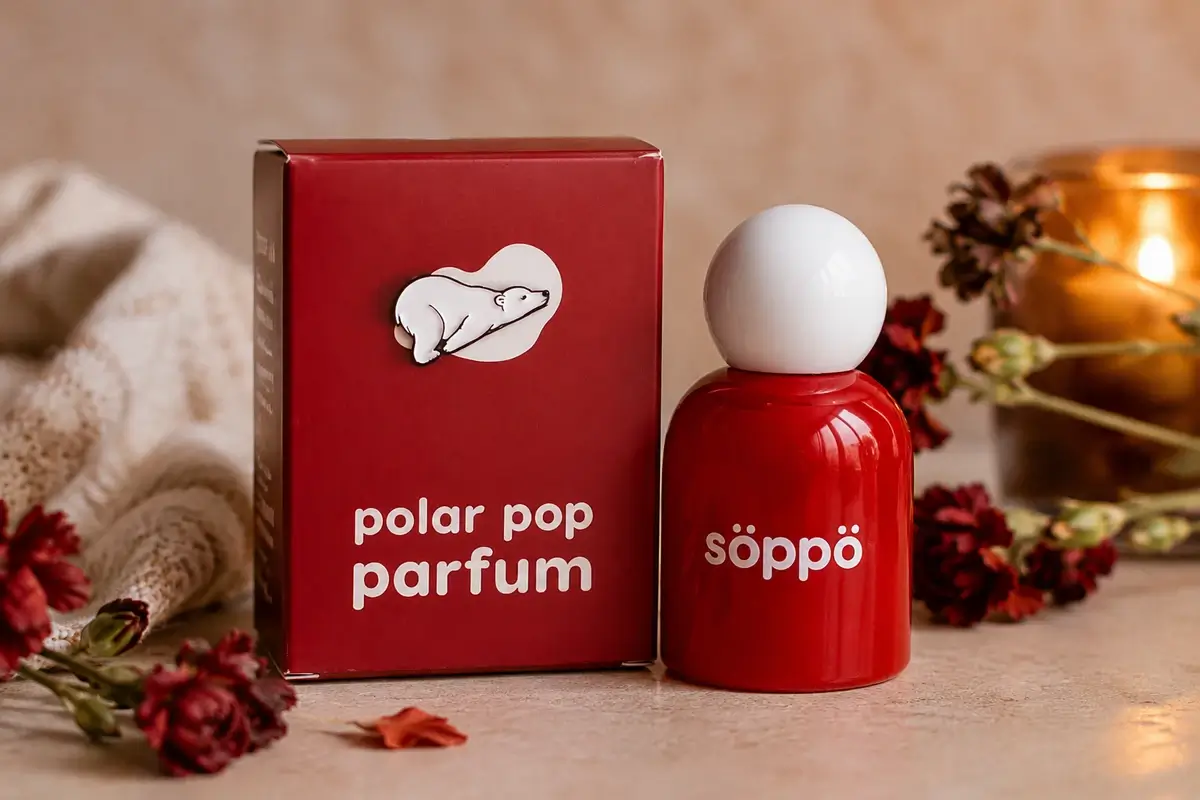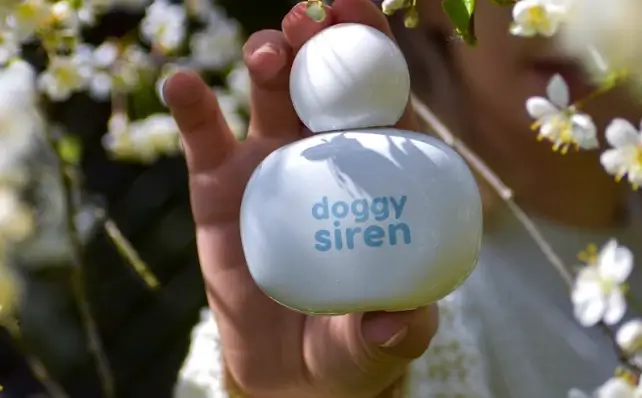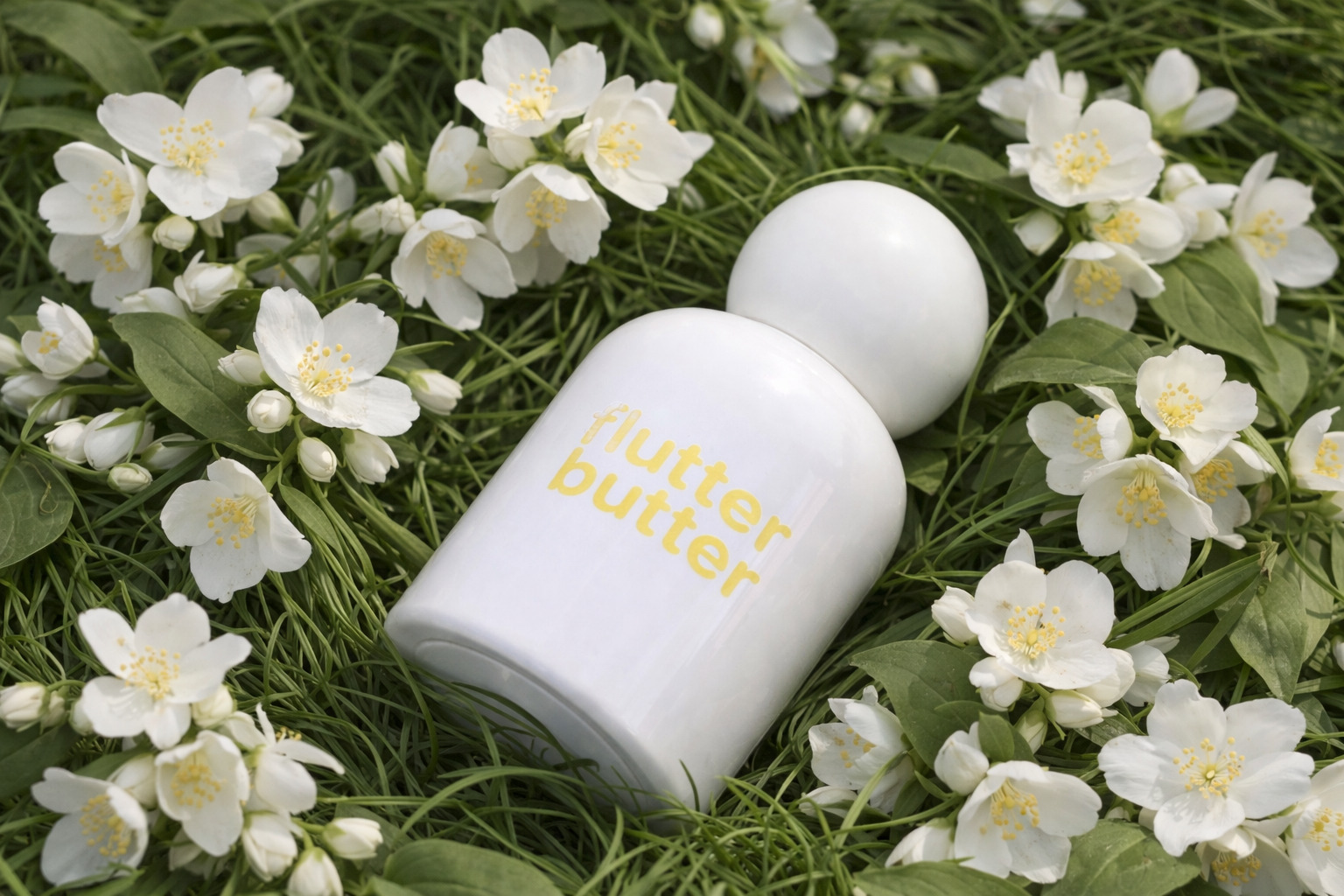

If you come across Söppö for the first time, you might first notice the pastel colors and cute bottles. There is no denying that we like nostalgia and things that bring a smile. However, we do not stop at aesthetics.
Behind this charm lies a very specific way of thinking about perfumes and creating scents. We do not create perfumes to tell a story exclusively about ourselves. We are more interested in what someone can find in them for themselves. We believe that a scent does not always have to be difficult to be unique. Sometimes it is enough that it smells like something you like or miss. Like lilac by the apartment block, linden flower and bubblegum from childhood.
For us, perfumes are not just a scent. They are one of the simplest ways to return to a memory, a mood, or a version of yourself that you miss a little. They can be a trigger for memories and their little guardian.
What really is Söppö?
Söppö is a perfume brand that combines nostalgia, quality, and empathy with the art of creating fragrance compositions. We create both monoperfumes, which are scents focused around one main impression, as well as more complex, classic perfumes built around a pyramid. In both cases, we are interested in the same thing: that the scent should be refined, high-quality, and close to the personwho will wear it.
Our perfumes often start with specific associations: lilac, bubblegum, linden, wild strawberry. Not because we want to simplify perfumery, but because the strongest scent memories are often very direct. May. A school store. A summer evening. Fruits eaten straight from the bush. These are scents that many people understand intuitively, even before they start analyzing notes, accords, and ingredients. Perfumes can be conscious, high-quality, and refined, yet close, readable, and emotionally accessible at the same time.
At first glance, Söppö may look exceptionally cute. After all, our pins, names, and bottles are meant to bring pleasure even before you use the perfume. But this setting is no coincidence. It is the language we use to talk about tenderness and emotional comfort. We do not want to create a cold, inaccessible, and intimidating world. We do not want our perfumes to be a test of knowledge, taste, or status. We are interested in something else: what a scent does to a person.
Söppö is an original brand, but not egocentrically artistic. We have our own language, our own scents, our own stories, and our own aesthetics, but we do not create perfumes to build a monument to our uniqueness. We are more interested in what someone will find in them for themselves.
Because Söppö is not just about how a product smells. It is about what that scent does to a person.
What does the word Söppö mean?
The name Söppö comes from the Finnish word söpö, which means something cute, sweet, and endearing. Something along the lines of „cute” or „kawaii”. In our understanding, it is about that little moment of warmth inside when you recall tender memories in your mind. About an instinctive smile and teary eyes. About the feeling: „oh, this is mine”.
For us söppö does not mean being infantile. It does not mean something shallow, accidental, or created just to look nice. Cuteness in Söppö is conscious. It is a part of our language and philosophy. We wanted to create a brand that you can enter without stress. One that gives pleasure but does not compromise on quality. One that can be endearing and well-thought-out at the same time.
For us, söppö means tenderness, closeness, and safety. We believe that cuteness can also be intelligent. That tenderness, understanding, and closeness can be a luxury. And that perfumes do not have to pretend to be inaccessible works of art to be beautiful, high-quality, and memorable.
A brand that starts with the human being
Many perfume brands talk primarily about themselves: about the creator's vision, their own world, artistry, and uniqueness. And there is, of course, a place for that in perfumes. We respect the original language, imagination, and need for expression. However, Söppö looks in a slightly different direction.
Our brand does not stem solely from the need to tell a story about ourselves. It stems from psychology, from curiosity about people, and from questions: what do they feel, what do they desire, what do they remember, what are they looking for, and how do they want to feel? That is why we do not want a scent to be primarily an artistic manifesto or proof of the creator's uniqueness. We are more interested in what happens on the other side: in the person who takes the bottle in their hand, discovers the scent, and suddenly feels that there is something of their own in it.
For us, one of the most important skills in creating perfumes is not imposing our taste, but understanding someone else's. Stepping outside our own preferences and habits. Asking: what will give someone pleasure or encouragement, bring peace or a sense of closeness? We can create scents that we ourselves love. But the truly interesting moment begins when we create a scent not „about us”, but about someone else. About someone's memory. Someone's need. Someone's way of experiencing the world. In a world where so many people and brands primarily want to talk about themselves, we prefer to listen.
Because the art is not to create perfumes exclusively for oneself. The art is to create perfumes in which a stranger will find something of their own. That is why the sentence that well describes the philosophy of Söppö is so important to us: We do not create perfumes to tell a story about ourselves. We create them so that someone can tell a story about themselves through them.
The psychology of scent: why we talk about memory capsules
Scent is personal, but not always lonely. Each of us has our own childhood, favorite people, our own places and associations. And yet, there are scents with which it suddenly turns out that many people feel something similar. Not identically, but close enough to think: „so it is not just me”.
Lilac is often not just lilac. It is May, a neighborhood, a garden, a walk, the beginning of warm evenings. Rhubarb is not just rhubarb. It is sourness on your fingers, compote, cake, an allotment garden, early spring. Bubblegum is not just a sweet scent. It is childhood, a school store, a pink tongue, and a world that was simpler for a moment.
That is exactly why in Söppö we talk about memory capsules. Scent can act faster than words. Before you can name notes, accords, or ingredients, an image appears in your head: home, your mother's makeup bag, summer air.
For us, this is the psychology of scent in practice. Not a dry theory and not scientific words glued to a product, but everyday observation of how people feel, remember, and choose. That is why we are not only interested in whether a scent is „nice”. We are interested in what it triggers and where it transports you. Does it open up a memory that does not need to be explained to anyone? Does it give peace, a sense of closeness, or a carefree feeling?
In this sense, perfumes can be a small, personal carrier of memory. Something you wear on your skin, but which works much deeper.
And this is very Söppö: scent as something private, but often surprisingly shared. A small capsule of memories in which everyone can find a slightly different, but very personal story.
Monoperfumes and layering: simplicity that teaches about scent
One of the most important pillars of Söppö is monoperfumes, which are scents focused around one main impression. For example, a plant or a fruit. These are scents that many people know, thanks to which they understand them immediately. They are rooted in memory.
Such simplicity in perfumes is not a lack of ambition. It is a decision. An attempt to capture one impression so that it does not blur under the weight of too many additions. Which is not always a simpler task than building a complex scent. When we create a lilac scent, the most important thing is that it truly resembles lilac. That it is readable and close to what someone remembers.
Monoperfumes are not a simplified version of perfumery. They are a way to better explore a scent. They help familiarize single notes and accords, to check what we really like, and what we would rather avoid.
Layering is a natural next step. When you combine two or three scents, you begin to see how the notes affect each other. It is a form of personalization and learning your own taste. You can combine rhubarb with cherry if you like sour-sweet tension. Jasmine with bubblegum if you want something more girlish. Lilac, jasmine, and peony if you want to create your own flower bouquet.
It is not about immediately becoming a perfumer. It is about better understanding scents and yourself within scents.
Chemistry of Cuteness: cuteness does not exclude quality
Chemistry of Cuteness is our way of saying that scent is both chemistry and emotion.
On one hand, perfumes are made from specific scent molecules, concentrations, proportions, and consciously built compositions. This is a very technical, precise, and responsible part. The scent must be refined, safe, and well-composed. On the other hand, something happens that cannot be fully programmed in a laboratory. The same composition can suddenly recall an important day or a person you have not thought of in a long time. The chemistry of a scent then meets the chemistry of memories.
It is exactly at this point that Chemistry of Cutenessbegins for us.
This is not cuteness just for the sake of cuteness. It is not about the product being only sweet, pastel, and looking nice in a picture. It is about creating an experience that is endearing, but not accidental. A small animal-shaped pin attached to the box, a surprising name, a color, the story of the scent - all this is meant to remind you that perfumes are not just a mixture of ingredients. They are an attempt to capture a moment that can stay with you for longer.
In this sense, the pin is a small talisman. A souvenir of the scent, but also of the emotion that this scent can trigger. You can detach it, keep it, pin it to a bag, or put it next to the bottle. It is a tiny object, but it is exactly such tiny objects that often store memories best.
Cuteness really does something to a person. It can disarm distance, lower tension, and make the product stop being a cold object. It becomes closer. More personal. Easier to like.
That is why in Söppö, cuteness is not meant to cover up the product. It is meant to open it up.
And behind all this still stands quality: an original scent, a conscious concentration, safety, refinement of the composition, and decisions that make sense. Aesthetics do not pretend to be quality. They lead to a product that truly possesses it.
This is exactly what Chemistry of Cutenessis for us: a meeting of the chemistry of scent with the chemistry of emotions. Cuteness that does not infantilize, but brings closer. Playfulness that does not strip the product of its seriousness. And a reminder that perfumes can be precisely created, beautiful, high-quality, and endearingly human at the same time.
Vegan and cruelty-free
If a brand talks about tenderness, empathy, and closeness, this tenderness cannot end with human beings.
That is why Söppö is a vegan and cruelty-free brand. This is not a separate addition to our philosophy, but its natural part. The brand's owners are vegans, so this approach does not stem from a trend or a marketing calculation. It stems from values that were with us earlier than the brand itself.
We do not want to build pleasure on the harm of animals. If we create products that are supposed to provide comfort, emotions, and good associations, we want them to be consistent with how they are made.
It is not about idealizing ourselves or pretending that every decision in business is simple. We try to be consistent, so that empathy is present not only in the brand's language, but also in choices: ingredients, production, testing, and responsibility for what we release into the world.
We want to create perfumes that smell like a memory, bring pleasure, and align with values that truly matter to us.
Who do we create Söppö for?
Söppö is for people who feel through scents.
For those who do not choose perfumes solely based on the description of notes, but on that hard-to-capture moment when a scent suddenly moves something. It reminds them of a place, a person, a season, a piece of childhood, or a version of themselves they would like to return to.
We create for people who like readable, but not boring scents. Ones that can be felt right away, but that do not end with the first impression. For people who sometimes want to smell like something very specific: lilac, rhubarb, lavender, linden, bubblegum, jasmine, warmth, peace, May, or holidays.
Söppö is also for those who like cute objects but do not want to compromise on quality. For people who notice small details: a pin attached to the packaging, a bottle on a shelf, a name that brings a smile, a scent matched to a mood, or a spritz of perfume in the evening, just for oneself.
For those who want a brand to have character but without any coldness. To be expressive but not haughty. Aesthetic but not empty. To be able to endear, recall a memory, and at the same time give a feeling that behind all this is real work on the product.
Söppö is for people who like emotion without pathos. Beauty without snobbery. Quality without pretentiousness. Perfumes without the need to pretend to be someone else.
For those who want to smell not so much „like luxury”, but like something that truly suits them. Like their own May, their own carefreeness, their own peace.
And that is exactly what Söppö is
Söppö was not created to make perfumes that are more haughty or more difficult than all the others.
It was created out of curiosity about people and out of the belief that a scent can say something very personal about a person. Sometimes more than a description, styling, or a grand manifesto.
For us, good perfumes do not have to prove their worth with complexity. They can be pleasant, readable, and close. They can smell like something you know, like, or miss.
Because the most beautiful scents are those in which someone finds something of their own.
We do not create perfumes to tell a story about ourselves.
We create them so that someone can tell a story about themselves through them.