
There are scents that return faster than a thought. A single brush of an aroma in the warm air is enough, and suddenly something inside becomes soft, familiar, a bit childish. We do not always know right away where we know it from. Sometimes it is just a sweet scent floating somewhere close to the skin, sometimes a favorite fragrance from years ago that did not yet have a name, a bottle, or a place on the bathroom shelf.
In summer, we especially often look for perfumes that smell exactly like this: close, warm, pleasant, unhurried. They do not have to be obvious or very elegant. It is enough that they stir the senses and recall the aroma of a moment we want to return to, if only for a single breath.
Why is scent so strongly connected to memories?
Scent has a unique ability to bypass long explanations. It does not need a story told from the beginning, a photo in an album, or a song from a specific summer. Sometimes one aroma is enough for the body to recognize something earlier than the head. Suddenly an image, a mood, someone's apartment, a time of day, or a feeling we could not summon on command appears.
This is exactly why perfumes can be so personal. They are not exclusively an accessory to clothing or a way to make an impression. They can become a small capsule of emotions — a record of what was important, even if it seemed completely ordinary at the time. One of the fragrance notes might recall home, another vacations, yet another a sense of security or carefreeness.
It does not always have to be a very specific memory. Sometimes a scent does not lead to a single scene, but to an atmosphere: lightness, peace, anticipation, joy, or tenderness. This is exactly where its power lies. Perfumes can touch a place that is hard to return to with words, but which still exists somewhere under the skin, in the breath, and in the positive associations that awaken suddenly, without warning.
Summer as a season of intense aromas
In summer, the world smells closer. Warm air makes aromas float around us faster, and the skin reacts to scent differently than on cold days. Perfumes can develop more clearly, flowers become more present, fruits ripen more intensely, and after the rain, even the sidewalk, earth, and leaves have their own recognizable trace.
It is the time of year when we go outside more often, stay away from home longer, and feel the surroundings more strongly. Scent ceases to be confined to indoors. It mixes with the warmth of the skin, the movement of the air, the freshness of the morning, and the delicate tiredness after a whole day. That is why even simple aromas can resonate more strongly in summer: flowers by the fence, fruit on the table, heated wood, clean fabric drying in the sun.
This exact intensity makes us often look for softer and more familiar scents in summer. It is not always about loud or expressive perfumes. Sometimes all it takes is something that settles well on the skin, gives the impression of freshness, sweetness, or warmth, and stays with us in the rhythm of a long, bright day.
Sweet notes – why are they associated with security and carefreeness?
Sweetness in perfumes does not always mean heaviness, intensity, and an evening character. Sometimes it is something much more subtle: a soft impression on the skin, a warm background, a sweet accent that does not dominate but makes the scent more friendly and close. That is why sweet perfumes are so often associated with comfort. They do not have to be loud to stir the senses. It is enough that they have something familiar in them: a bit of vanilla softness, milky warmth, fruity juiciness, or floral delicacy.
Many people who type "sweet women's perfumes" into a search engine are not looking for an overly sugary scent at all. More often, it is about perfumes that are sweet in a pleasant, enveloping, and easy-to-wear way. Those that do not overwhelm but stay close to the body and give a sense of freedom. A sweet scent can be light, joyful, a bit frivolous, or very tender. It can fit everyday life just as well as more festive moments.
This exact versatility makes sweet notes find themselves so well in fragrances inspired by childhood. Sweetness does not have to be a symbol of luxury or a big night out here. It can simply be a small return to carefreeness — to a time when scent was associated more with pleasure than with rules.
Bubblegum, milky tenderness, and hot chocolate – the sweetness of childhood in gourmand style
In perfumery, gourmand notes are those that brush against the world of flavors: vanilla, caramel, chocolate, honey, whipped cream, marshmallows, milkiness, or sugary accents. It is not always about the perfumes smelling literally like a dessert. Often, the impression is more important: creaminess, warmth, softness, the pleasant aroma of something the body remembers faster than the head. Sweet gourmand notes can evoke not only a taste, but also a scene — hands sticky with sugar, a mug held with both hands, a kitchen where something is cooling on the counter.
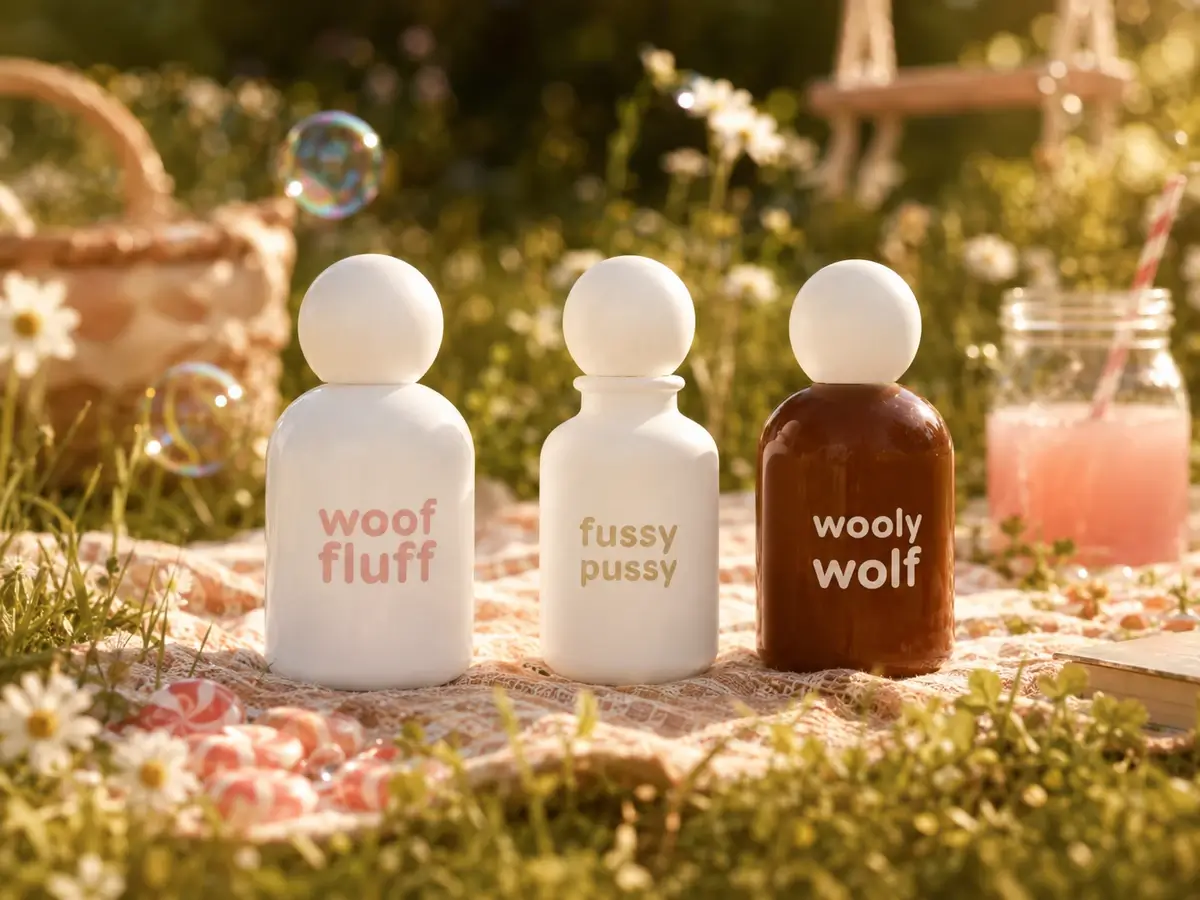
The most carefree version of such sweetness is bubblegum. Pink, light, a bit frivolous, it does not try to be elegant in the classic sense. That is exactly why it fits the theme of childhood so well. At Söppö, this direction appears in Woof Fluff — perfumes with a bubblegum scent, which can be read like a fragrance postcard from a time when sweetness needed no justification.
It works differently with Fussy Pussy. This is not a loud or candy-like sweetness, but more milky, creamy, close to the skin. It is associated with a soft dessert, cream, vanilla, something homely and tender. It is like the scent of a moment when the world becomes gentler for a second — without a grand event, without decorations, just close.
Yet another side of gourmand is shown by Wooly Wolf. It is the scent of hot chocolate with marshmallows: more wintery, denser, enveloping. It is not as summery as fruits or flowers, but childhood does not only smell like autumn or vacations, after all. Sometimes it smells like a mug held in the hands, warmth after returning from the cold, and chocolate that leaves a sweet trace on the lips. In this edition, gourmand is not just appetizing. It is safe.
Wild strawberry and lilac – summer garden scents that the skin remembers
Sweet perfumes do not have to go exclusively towards vanilla, caramel, or chocolate. In summer, sweetness very often has a more natural rhythm: it is juicy, fruity, floral, sometimes green, sometimes as delicate as the air after an afternoon spent in the garden. It is a sweetness that does not resemble a dessert, but a fruit picked from a bush, warm flowers by the fence, or a bouquet that for a moment smells like the entire beginning of summer.
The wild strawberry is exceptionally graceful in this world. Tiny, hidden low, intense despite its size. It has something childish about it: bending down to the grass, looking for red dots between the leaves, hands smelling of fruit and earth. At Söppö, this direction appears in Mog Them — wild strawberry-scented perfumes that show a fruity, juicy sweetness close to the sun. It is not a heavy sweetness for evening outings, but the aroma of a small summer discovery.
Doggy Siren tells a different version of the same lightness. Lilac is not gourmand, it does not smell like sugar or whipped cream. Its sweetness is floral, fresh, a bit romantic. It is associated with a garden, the first warm days, visits to grandma, and the air that gets heavier with flowers when the day slowly approaches the evening. Thus, wild strawberry and lilac show two different faces of summer sweetness: fruity and floral, juicy and nostalgic, simple and at the same time very personal.
When are sweet perfumes light, and when do they become evening fragrances?
Sweet perfumes can have a very different tempo. Some stay close to the skin, are soft, everyday, and almost innocent. Others build a distinct, sensual trail from the very first moment and find themselves better when the day slows down, the light gets warmer, and the scent can afford a greater presence. Whether the sweetness will be light or more for the evening is determined not by its presence alone, but by what notes it has been combined with.
Lighter sweet perfumes are often based on fruits, flowers, fresher accents, or delicate musk. Such sweetness can accompany you all day because it does not dominate the space. It is rather like a soft detail: noticeable, but not exaggerated. It gives the impression of cleanliness, warmth, or pleasant closeness, without the effect of a heavy, intensely sweet composition.
Scents where sweetness meets a stronger base behave differently. Vanilla, patchouli, sandalwood, musk, or a bit of pink pepper can give perfumes depth, elegance, and a more sensual character. Such compositions often fit evening outings, night outings, or special occasions better because they leave a more distinct impression. However, this does not mean they are "better" than lighter scents. They simply tell a different story — less carefree and more atmospheric.
Fragrance longevity in summer – what affects how perfumes behave on the skin?
In summer, perfumes may seem more present from the very first moment. Warm skin triggers the composition faster, and a higher temperature makes the aroma float more strongly in the air. That is why the same scent that was calm and close to the skin in winter can seem more expressive in July. However, this does not always mean it will last longer.
Fragrance longevity depends on many things at once: the type of notes, the concentration of the composition, the skin's hydration level, body temperature, the method of application, and even how quickly we get used to our own perfumes. Light notes usually develop faster and can disappear earlier, while heavier accents often stay on the skin longer. Therefore, it is not worth judging perfumes only by the first few minutes. It is good to give them time and check how they behave after an hour or two, and not just right after spraying.
For everyday wear, a simple rule helps: apply perfumes to well-moisturized skin and do not rub them after use. Friction can disturb the first notes and accelerate their volatility. It is also worth remembering that in summer, less often means better. If the scent stayed close to the skin but still came back with movement, heat, or a gust of air, it does not mean it has disappeared at all. Perhaps it is simply working more quietly — exactly as some perfumes like to do.
How to choose sweet perfumes that are not the equivalent of someone else's story?
In the world of perfumery, it is easy to fall into looking for similarities. Someone asks about a cult scent, someone else about an equivalent of a known composition, someone else is looking for perfumes that will smell "like something" they already know from the perfumery. This is understandable, because scent is hard to describe without a point of reference. And yet, with sweet perfumes, it is sometimes worth reversing the question. Not: "what is this similar to?", but: "what does this scent remind me of?".
Sweetness is very personal. For one person, the ideal choice will be a soft, creamy aroma close to the skin. For another, something fruity, fresher, less obvious will turn out to be the perfect choice. Someone will look for a scent for special occasions, someone else for one that can be worn all day. Versatility means that sweet perfumes can have many faces, but that is exactly why it is not worth closing them into one pattern.
It is best to test the scent on your own skin and let it develop. The first impression is important, but only after some time can you see if a given composition really fits our rhythm. Whether it is too sweet, or exactly pleasant. Whether it stays close, or becomes too expressive. Whether it evokes comfort, or tires after an hour. Perfumes do not have to be someone else's story or a repetition of a known scenario. They can be something much more interesting: a small, personal trace that smells the way we want to feel.
A story from the brand founder – one summer, one trace
I remember most strongly not the great moments, but the completely ordinary ones. A summer afternoon, when the air stood still, the curtain moved from a draft, and a sweet trace from an afternoon snack remained on the wooden table. There was nothing special about it, and yet this aroma comes back to me to this day — warm, slightly sticky, homely, calm.
Over time, I understood that exactly such scents stay in us the longest. Not always because they were beautiful in the classic sense. Rather because they were ours. Connected to a place, a body, a time of day, the voice of someone close, or the light coming in through the window.
That is why when I think about perfumes, I do not only think about compositions. I think about small traces that can become someone's favorite scent. About aromas that do not try to prove anything, but evoke positive associations and stay close to the skin like something our senses have known for a long time.
Conclusion – a scent that does not have to be grown-up
We often treat sweet perfumes as something obvious: they should be pleasant, feminine, sensual, or fit a specific occasion. And yet their greatest strength may be hidden elsewhere — in this quiet ability to recall states that we have long considered lost. Carefreeness. Peace. Curiosity. Joy in simple things.
In summer, it is easier to allow yourself such a choice. For a scent that does not have to be serious, perfect, or similar to any known composition. It can be soft, sweet, fruity, floral, enveloping, or completely unobvious. The important thing is that it settles well on the skin and fits how we want to feel.
Because sometimes the best perfumes are not the ones that make the greatest impression. They are the ones you want to return to — like a vacation memory that still smells of warmth.
FAQ – sweet perfumes and summer scents
Are sweet perfumes suitable for summer?
Yes, sweet perfumes can work well in summer if they are not too heavy or overwhelming. On warm days, it is often better to choose compositions where the sweetness is broken with freshness, a fruity accent, flowers, or delicate musk.
Are sweet women's perfumes always intense?
No. Sweet women's perfumes can be light, soft, close to the skin, and very everyday. The intensity is determined by the whole composition, not just the presence of sweet notes.
What affects fragrance longevity in summer?
Fragrance longevity is affected by, among other things, the type of notes, skin temperature, its hydration level, the method of application, and the concentration of the composition. In summer, the scent can develop faster, but this does not always mean it will last longer on the skin.
Does a sweet scent always mean gourmand?
No. Gourmand are scents associated with desserts, creaminess, and the sweetness of food, but a sweet scent can also have a fruity, floral, honey, or musky character. Sweetness in perfumes has many shades.
How to choose sweet perfumes for yourself?
It is best to test the scent on your own skin and give it time to develop. It is worth being guided not only by whether the composition is fashionable or well-known, but above all by whether it evokes pleasant associations and fits well with our way of wearing perfumes.