
Completely different possibilities are offered by Cherry Bomb – a more multi-threaded composition, in which black cherries and Maraschino liqueur meet tobacco leaves, rhubarb, roasted almonds, sandalwood, patchouli, and tonka bean. Here, the character of the fragrance is built exactly by the contrast between fruity sweetness, more dry accents, and a deeper background.
However, this does not mean that the peony is reserved for a romantic person, and cherry with tobacco for someone with a strong character. We do not want to assign ready-made personalities to specific notes. Perfumes can be one of the elements of self-expression, but you are the one who gives them meaning.
You also do not have to remain faithful to a single aesthetic. Just as our clothes, music, or the things we like to surround ourselves with change, our scent preferences can also change. Perfumes do not have to define you once and for all. They can simply accompany what is close to you at any given moment.
Do fragrances affect mood? Why do some aromas stay with us for a long time?
The relationship between fragrance and emotions is much more complex than simply assigning specific states to specific aromas. When it comes to perfumes, we do not want to suggest that a given fragrance can predictably improve your mood, regulate emotions, or affect your well-being. Much more interesting to us is the relationship between the sense of smell, memory, and personal associations.
To understand it, it is worth taking a brief look at how the sense of smell works. Odorous substances present in the air reach olfactory receptors located in the nasal cavity. The information is then transmitted as olfactory signals and processed by the corresponding brain structures. The processes related to the reception of olfactory stimuli are also linked to memory and the emotional significance of previous experiences.
That is why a familiar fragrance can evoke memories, but it does not have to mean the same thing to everyone. In Doggy Siren the starting point is lilac – an aroma leading in our story towards May, blooming bushes, and spring air. For you, however, it may mean your grandmother's garden, the way to school, a bouquet that once stood on the table, or simply a scent you like without any specific story in the background.
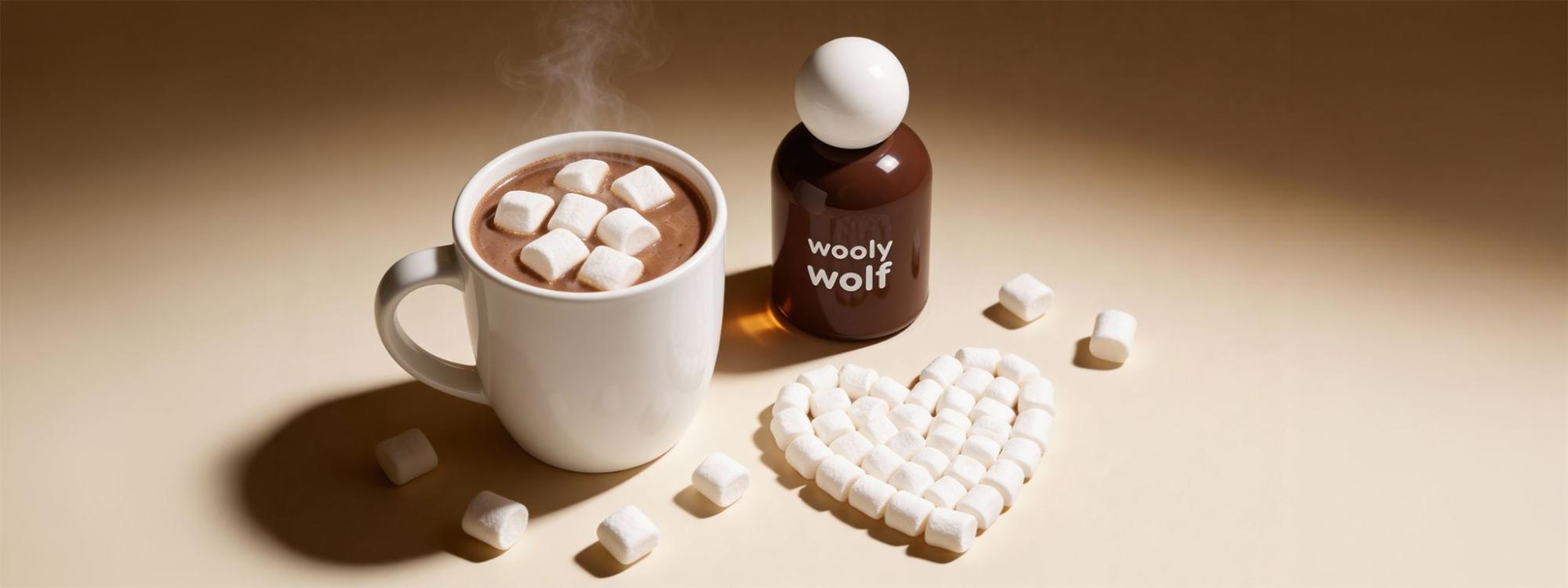
A completely different kind of memory can be triggered by Wooly Wolf, built around hot chocolate with marshmallows. In our story, there is snow, a return from the freezing cold, wet gloves, and a steaming mug. But the same aroma can remind someone of a cafe, a winter trip, or an evening spent with a specific person.
Such a sudden recall of autobiographical memories by aromas is often referred to as the Proust effect. It does not mean that one fragrance triggers a predetermined emotion. It is rather about the fact that an olfactory stimulus can be connected to a fragment of one's own story.
Therefore, instead of asking what mood a specific aroma "should" have, you can ask: what does this fragrance remind me of? Sometimes the answer will be a specific place or person, and sometimes just the pleasure of the scent itself.
How to choose a fragrance according to your own preferences and current mood?
You do not need to know all the perfumery terminology to consciously choose perfumes. A good start is to observe your own preferences. Do you pay attention more often to flowers, fruits, sweet gourmands, spices, or woody notes? Mood is treated here as a current desire for a specific olfactory direction, rather than a state that perfumes are supposed to change.
The next step is to gradually narrow down the choice. Just stating "I like fruity fragrances" still leaves a very broad field. A good example are three different fruity directions in our collection: Jelly Belly with the scent of lychee, Mad Gut with the scent of passion fruit, and Mog Them with the scent of wild strawberry. They all belong to the fruity world, but each focuses attention on a different aroma. Such comparisons help us notice that we might not like the whole fragrance family, but a very specific part of it.
Similarly, you can get to know flowers, woody notes, or gourmand. You do not need to immediately be able to name everything your nose smells. It is enough to notice which aromas you want to return to, and which cease to be interesting after a few minutes.
It is also worth giving perfumes a moment on the skin. The description and fragrance family help choose a direction, but they will not replace your own perception. The most important question is not "should this fragrance suit me?", but "do I really want to wear it?".
If over time you feel like experimenting further, you can also try layering. However, we will not elaborate on this topic here – in the context of this article, the most important thing remains getting to know your own preferences and choosing fragrances that are truly close to you.
One note or a whole story? Monoperfumes and classic compositions
By getting to know your own taste, you can notice one more difference: some find themselves best in fragrances focused on one clear motif, others prefer to observe how many different notes meet in a perfume.
At Söppö we create monoperfumes, which are compositions focused on a single note, accord, or a very distinct olfactory impression. This does not literally mean the presence of a single ingredient in the formula. The other elements serve to keep the main theme clear. This way of building perfumes allows you to calmly get to know a specific aroma and see if it truly matches your preferences.
However, we do not treat monoperfumes as a simplified version of perfumery, nor as a stage you have to go through before more complex compositions. One clear note can be a fully-fledged choice precisely because it does not need many additional elements to bring pleasure to the person wearing it.
Classic compositions work differently. Individual notes create a more multi-threaded structure and can appear at subsequent stages of the fragrance's development. An example is French 75, where the opening is built by gin, juniper, lemon, and a champagne accord, then lemongrass, lavender, jasmine, and cardamom appear, and the base consists of quinine, amber, and musk. Here, part of the experience is exactly observing how different notes begin to interact with each other.
So there is no need to choose between a "simple" and an "ambitious" fragrance. These are two different ways of building perfumes and two different ways of perceiving them. The most important thing remains which of them suits you better at a given moment.

Not just a return to the past – a fragrance can become a part of new memories
When we think about the relationship between fragrance and memory, we most often imagine an aroma that suddenly brings back something from the past. But this relationship can also work the other way around. A given fragrance can appear in our lives right now, and only after some time begin to be associated with a specific place, person, or period.
It could be a single bottle taken on vacation, perfumes used in the first weeks after a move, or an aroma we often reach for during a specific summer. Initially, it does not have to mean anything special. Over time, through subsequent situations and experiences, it can become part of the memory of that period. That is exactly why at Söppö we think of perfumes not only as capsules of what has already been, but also as fragrances that can accompany stories that are just being made.
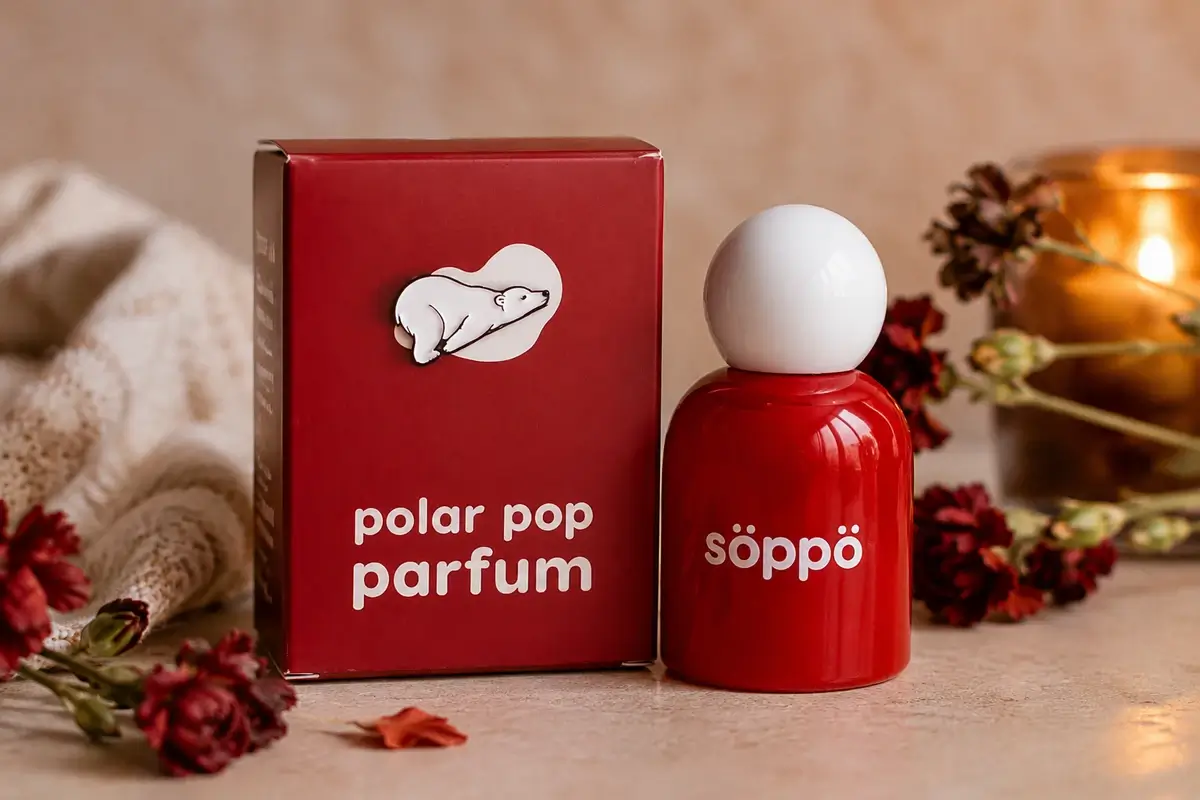
A good example is Polar Pop, which is our interpretation of spiced cola with clove, cinnamon, and nutmeg. In the story of this fragrance, there is December, the first snow, waiting for the holidays, and family scenes from the kitchen. But that is only our starting point. When the perfumes reach you, they can over time be connected with a completely different winter and different people.
So you do not have to look only for perfumes that from the very first moment evoke memories. Sometimes it is enough to choose an aroma that feels close today, and see what meaning it takes on later. Some positive associations appear immediately, others are built slowly with daily wear.
In this way, a fragrance can become a part of a personal history without planning the process. In a few years, a single spray can remind you not only of the aroma itself, but also of the weather, a place, or small events that today seem completely ordinary. And perhaps that is why perfumes so easily cross the line between something that is just supposed to smell pleasant, and something that begins to mean a little more.
A story from the founder of Söppö – the most interesting part is what happens on the other side of the bottle
When I started creating Söppö, I did not want to build a brand that talks primarily about itself. About how unique the creator is, how complicated their artistic vision was, and how the recipient should interpret the finished composition. I was much more interested in what would happen later – when the perfumes hit the skin of a specific person.
Because that is when the fragrance stops belonging exclusively to us.
We can create its name, composition, and its first story. We can know what images accompanied us during the work. But we cannot decide what it will remind you of. And that is very good. At Söppö, from the beginning, we are interested in the person: what they remember, what they miss, what attracts them, and how they want to smell. That is why we do not create perfumes to lock one correct interpretation inside them.
It is exactly people who show us later how many stories can be contained in one fragrance. An aroma that for us started with a specific image, for someone else can mean a completely different person, place, or moment in our lives. Sometimes someone recognizes a memory immediately. Sometimes they just say: "I want to smell like this". Both answers are equally important to me.
That is why one of the sentences about Söppö that is closest to me remains: we do not create perfumes to tell a story about ourselves. We create them so that someone can use them to tell a story about themselves. We also describe this philosophy on our website as the brand's starting point: a fragrance truly begins to live when it meets a specific person, their memory, associations, and their own way of wearing perfumes.
FAQ – fragrance, emotions, and choosing perfumes your way
Do fragrances affect our well-being?
The influence of fragrances on a person is a complex issue in which, among other things, previous experiences, memory, and individual associations matter. Different fragrances can remind us of specific situations, people, or places, but this does not mean that perfumes predictably change our emotional state, provide psychological comfort or affect our psyche. Therefore, we do not attribute to perfumes the effect of regulating emotions, improving mood, or changing well-being.
How does the sense of smell work and why does it matter in daily functioning?
The human nose perceives odorous substances through olfactory receptors located in the nasal cavity. Then the information goes for further processing of olfactory signals by the nervous system and the corresponding brain structures. The sense of smell plays an important function in daily functioning – it helps, among other things, in recognizing surroundings, perceiving food, or detecting danger, for example, the smell of smoke or spoiled food.
In humans olfactory pathways and individual anatomical structures also participate in processes related to memory and the emotional significance of experiences. In this context, we speak of, among others, the limbic system or the role of the amygdala. However, this does not mean that a fragrance has simple "direct access" to emotions and can control them at will.
Why can specific scent notes evoke such different associations?
Specific scent notes can be stored in memory along with very different events. The scent of lavender will remind one person of a garden, another of cosmetics used in their family home, and yet someone else of a holiday trip. It will be similar with jasmine, lilac, or sandalwood.
That is why the same fragrance does not have to mean the same thing to everyone. The perception of an aroma also depends on personal history, context, and previous experiences. This is exactly why, instead of assigning ready-made emotions to notes, we prefer to ask: what does this fragrance remind you of?
What is the significance of olfactory pathways for scent memory?
Olfactory pathways are responsible for transmitting olfactory information from receptors to brain structures involved in further processing of stimuli. In this process, areas related to memory and the emotional context of experiences, including structures located in the area of the limbic system.
This is one of the reasons why an aroma can become strongly connected with a specific memory. The phenomenon of a sudden return of an autobiographical memory under the influence of a fragrance is often referred to as the Proust effect.
Do perfumes and essential oils work the same way?
No. Essential oils and perfumes are not the same product, so information regarding one should not be automatically transferred to the other. When we read about how essential oils work or about experiments with diffused essential oil, we might be talking about a completely different method of exposure, composition, and purpose of the study than in the case of wearing perfumes on the skin.
This is particularly important with ingredients such as lavender oil. Even if a specific oil was the subject of research, this does not mean that lavender-scented perfumes have the same effect, or that we can attribute to them a calming effect.
Can the results of research on fragrances be directly related to perfumes?
Not always. The fact that studies show specific reactions to a particular odorous substance, oil, or method of exposure, does not automatically mean that the same result will occur when using ready-made perfumes. Even less so should one directly transfer the results obtained in clinical trials concerning specific substances to every product with a similar scent.
That is why we do not want to say that properly selected perfumes can improve the quality of life, act on the mental state, or support cognitive functions through, for example, "improving concentration". In the case of perfumes, we stick to what we can describe reliably: the fragrance, individual perception, associations, and memory.
Are aromatherapy and scent therapy the same as using perfumes?
No. Aromatherapy and scent therapy relate to a different context than using perfumes as a fragrance product and an element of personal style. The very fact that perfumes smell of lavender, jasmine, or another known note does not make them a therapeutic product.
At Söppö, we do not present perfumes as a way to solve emotional problems, regulate emotions, or change your state of health. We are primarily interested in how a fragrance meets the memory, personal experiences, and the history of the person who wears it.
Can a properly selected fragrance improve your mood?
We do not treat perfumes as a tool for improving mood. Properly selected perfumes can simply match our current preferences – we might be in the mood for a floral, fruity, woody, or gourmand aroma. If, in addition, a given fragrance has positive associations for us, wearing it can be part of a pleasant experience, but it is not equivalent to a predictable effect on mood or well-being.
Does the sense of smell serve only to perceive pleasant aromas?
No. The sense of smell serves a much broader function. Over the course of evolution, it allowed, among other things, to recognize surroundings, detect danger or seek sources of food. Also today, it helps to assess food, catch the smell of smoke, or notice other signals from the surroundings.
Perfumes, on the other hand, utilize this part of sensory perception that allows us to experience aromas, distinguish them, and over time give them our own meanings.