
The world of perfume is full of categories: floral, fruity, woody, gourmand, daytime, evening, feminine, or masculine. These terms can help with initial orientation, but they do not have to define the boundaries of your own taste. At Söppö, we are more interested in what you really like and how you want to smell, than in matching a scent to a ready-made personality archetype.
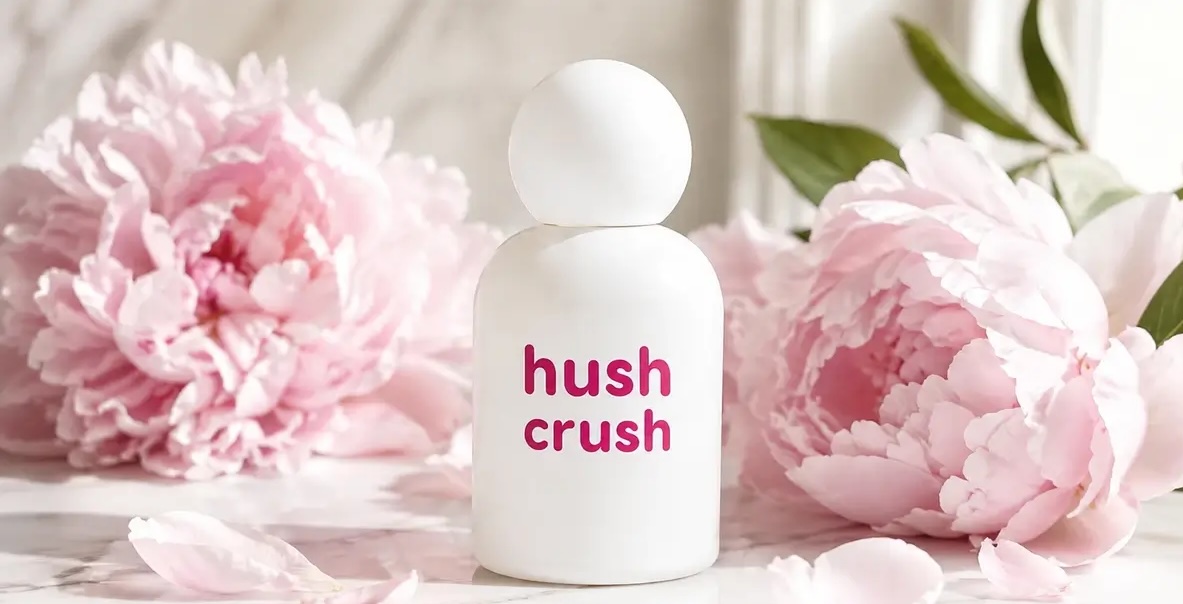
Sometimes the best choice turns out to be one very specific aroma. In Hush Crush we focus on peony – botanical and floral, evoking associations with a freshly cut bouquet. If such a direction is close to you, you don't need many additional notes. Sometimes one peony is truly enough.
Completely different possibilities are offered by Cherry Bomb – a more multi-layered composition, where black cherries and Maraschino liqueur meet tobacco leaves, rhubarb, roasted almonds, sandalwood, patchouli, and tonka. Here, the character of the fragrance is built precisely by the contrast between fruity sweetness, drier accents, and a deeper background.
This does not mean, however, that peony is reserved for a romantic person, and cherry with tobacco for someone with a strong character. We don't want to assign ready-made personalities to specific notes. Perfumes can be one element of expressing oneself, but you are the one who gives them meaning.
You also don't have to remain faithful to one aesthetic. Just as our clothes, music, or the things we like to surround ourselves with change, our scent preferences can also change. Perfumes don't have to define you once and for all. They can simply accompany what is close to you at any given moment.
Do scents affect our mood? Why do some aromas stay with us for a long time?
The relationship between scent and emotions is much more complex than simply assigning specific states to specific aromas. In the case of perfumes, we don't want to suggest that a given scent can predictably improve mood, regulate emotions, or affect well-being. Much more interesting to us is the relationship between smell, memory, and personal associations.
To understand it, it's worth taking a brief look at how the sense of smell works. Fragrant substances present in the air reach the olfactory receptors located in the nasal cavity. The information is then transmitted as olfactory signals and is processed by the appropriate brain structures. The processes related to receiving olfactory stimuli are also linked to memory and the emotional significance of previous experiences.
Therefore, a familiar scent can evoke memories, but it doesn't have to mean the same for everyone. In Doggy Siren the starting point is lilac – an aroma leading our story towards May, blooming shrubs, and spring air. For you, however, it might mean grandma's garden, the way to school, a bouquet once standing on a table, or simply a scent you like without any specific story in the background.
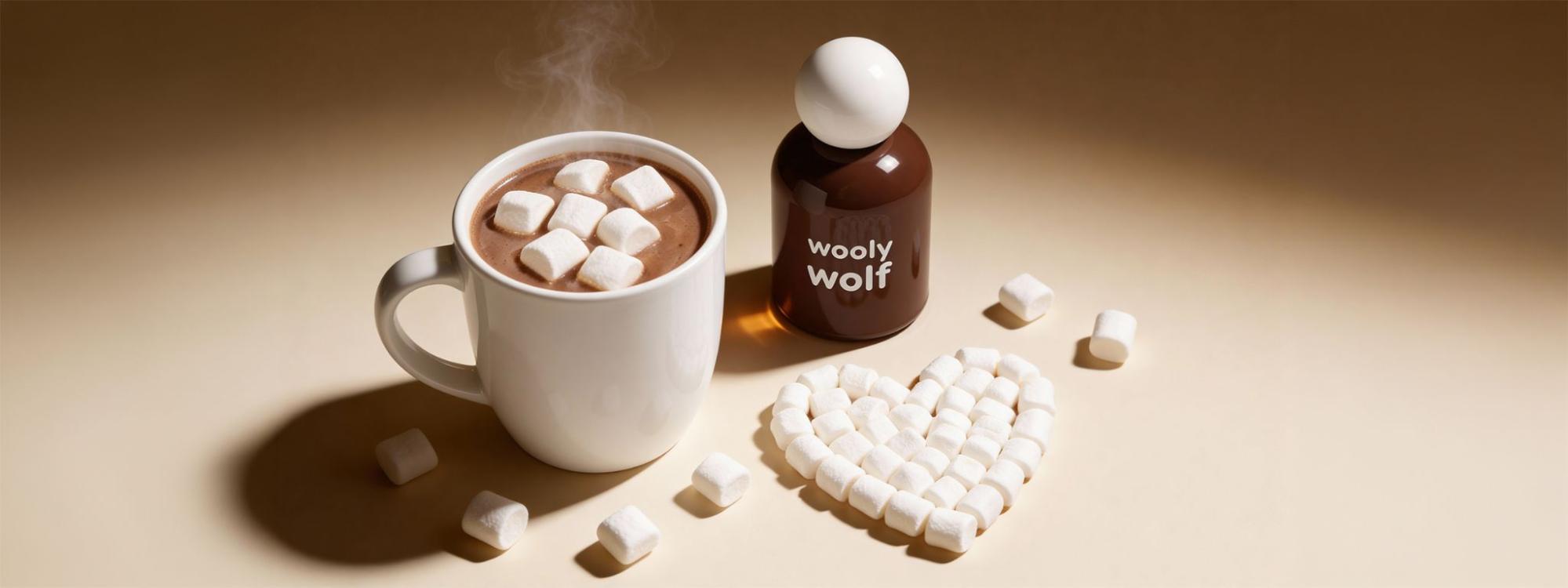
A completely different kind of memory can be triggered by Wooly Wolf, built around hot chocolate with marshmallows. In our story, there is snow, returning from the cold, wet gloves, and a steaming mug. But the same aroma might remind someone of a cafe, a winter trip, or an evening spent with a specific person.
Such sudden elicitation of autobiographical memories by aromas is often referred to as the Proust effect. It does not mean that one scent triggers a predetermined emotion. It's more about the fact that a scent stimulus can be linked to a fragment of one's own history.
So instead of asking what mood a specific aroma "should" have, one can ask: what does this scent remind me of? Sometimes the answer will be a specific place or person, and sometimes solely the pleasure of the scent itself.
How to choose a scent according to your own preferences and current mood?
You don't need to know all the perfumery terminology to choose perfumes consciously. A good start is observing your own preferences. Do you more often pay attention to flowers, fruits, sweet gourmands, spices, or woody notes? Mood is treated here as a current desire for a certain scent direction, rather than a state that the perfume is intended to change.
The next step is gradually narrowing down the choice. The statement "I like fruity scents" itself still leaves a very wide field. A good example are three different fruity directions in our collection: Jelly Belly with the scent of lychee, Mad Gut with the scent of passion fruit and Mog Them with the scent of wild strawberry. All belong to the fruity world, but each focuses attention on a different aroma. Such comparisons help us notice that we may not like an entire fragrance family, but rather a very specific part of it.
Similarly, you can get to know flowers, woody notes, or gourmands. You don't have to be able to name everything the nose smells right away. It's enough to notice which aromas you want to come back to and which stop being interesting after a few minutes.
It's also worth giving perfume a moment on the skin. The description and fragrance family help choose a direction, but they won't replace your own perception. The most important question is not "should this scent fit me?", but “do I really want to wear it?”.
If the desire for further experimentation arises over time, you can also try layering. However, we won't expand on this topic here – in the context of this article, the most important thing remains getting to know your own preferences and choosing scents that are truly close to us.
One note or a whole story? Monoperfumes and classic compositions
By getting to know your own taste, you can notice another difference: some feel best in scents focused on one clear motif, others prefer to observe how many different notes meet in a perfume.
At Söppö, we create monoperfumes, meaning compositions focused on one note, accord, or a very clear scent impression. This does not literally mean the presence of only one ingredient in the formula. The other elements serve to keep the main theme clear. This way of building perfumes allows you to calmly get to know a specific aroma and check if it truly corresponds to your preferences.
We do not, however, treat monoperfumes as a simplified version of perfumery or a stage that must be passed before more complex compositions. One clear note can be a full-fledged choice precisely because it does not need many additional elements to bring pleasure to the person wearing it.
Classic compositions work differently. Individual notes create a more multi-layered structure and can appear at subsequent stages of the scent's development. An example is French 75, where the opening is built by gin, juniper, lemon, and a champagne accord, then lemongrass, lavender, jasmine, and cardamom appear, and the base remains quinine, ambergris, and musk. Here, part of the experience is precisely observing how different notes begin to interact with each other.
There is therefore no need to choose between a "simple" and an "ambitious" scent. These are two different ways of building perfumes and two different ways of perceiving them. The most important thing remains which of them suits you better at a given moment.

Not just a return to the past – scent can become part of new memories
When we think about the relationship between scent and memory, we most often imagine an aroma that suddenly reminds us of something from the past. But this dependency can also work the other way around. A given scent may appear in our life right now, and only after some time start to be associated with a specific place, person, or period.
It could be one bottle taken on vacation, a perfume used in the first weeks after moving, or an aroma we often reach for during a specific summer. Initially, it doesn't have to mean anything special. Over time, through subsequent situations and experiences, it can become part of the memory of that period. That is why at Söppö we think of perfumes not only as capsules of what has already been, but also as scents that can accompany stories that are only just being created.
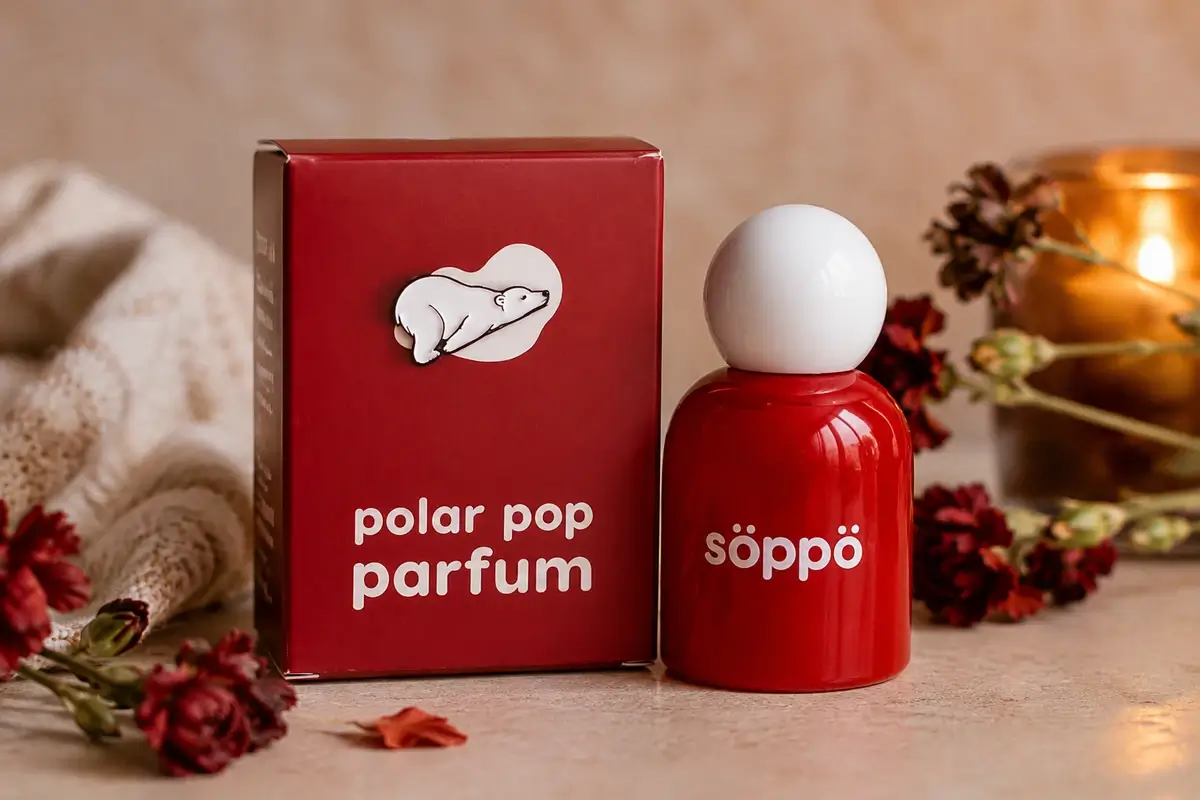
A good example is Polar Pop, our interpretation of spicy cola with clove, cinnamon, and nutmeg. In the story of this scent, there is December, the first snow, the anticipation of Christmas, and family scenes from the kitchen. But that is only our starting point. When the perfume reaches you, it can over time be linked to a completely different winter and other people.
So you don't have to look only for perfumes that from the first moment evoke memories. Sometimes it's enough to choose an aroma that seems close to you today and see what meaning it will get later. Some positive associations appear immediately, others build up slowly with daily wear.
In this way, a scent can become part of a personal story without planning this process. In a few years, one spray may remind you not only of the aroma itself, but also of the weather, a place, or small events that seem completely ordinary today. And perhaps that is why perfume so easily crosses the line between something that simply has to smell pleasant, and something that begins to mean a bit more.
A story from the founder of Söppö – the most interesting thing is what happens on the other side of the bottle
When I started creating Söppö, I didn't want to build a brand that speaks primarily about itself. About how unique the creator is, how complicated their artistic vision was, and how the recipient should interpret the finished composition. I was much more interested in what would happen later – when the perfume reaches the skin of a specific person.
Because that's when the scent ceases to belong exclusively to us.
We can create its name, composition, and the first story. We can know what images accompanied us during the work. But we cannot decide what it will remind you of. And that's a good thing. At Söppö, from the beginning, we are interested in the person: what they remember, what they miss, what attracts them, and how they want to smell. That's why we don't create perfumes to lock one correct interpretation inside them.
It's the people who later show us how many stories can fit into one scent. An aroma that for us began with a specific image can mean a completely different person, place, or moment in our lifefor someone else. Sometimes someone recognizes a memory immediately. Sometimes they just say: "I want to smell like this." Both answers are equally important to me.
That is why one of the sentences closest to me regarding Söppö remains: we don't create perfumes to tell a story about ourselves. We create them so that someone can tell a story about themselves through them. We also describe this philosophy on our website as the brand's starting point: a scent truly begins to live when it meets a specific person, their memory, associations, and their own way of wearing perfume.
FAQ – scent, emotions, and choosing perfumes your way
Do scents affect our well-being?
The influence of scents on humans is a complex issue where previous experiences, memory, and individual associations matter. Different scents can remind us of specific situations, people, or places, but this does not mean that perfumes predictably change our emotional state, provide psychological comfort or affect our psyche. Therefore, we do not attribute an effect consisting of regulating emotions, improving mood, or changing well-being to perfumes.
How does the sense of smell work and why does it matter in daily life?
The human nose perceives fragrant substances through olfactory receptors located in the nasal cavity. The information then goes for further olfactory signal processing by the nervous system and the appropriate brain structures. The sense of smell performs an important function in daily life – it helps, among other things, in recognizing the environment, perceiving food, or detecting danger, for example, the smell of smoke or spoiled food.
In humans, olfactory pathways and individual anatomical structures also participate in processes related to memory and the emotional significance of experiences. In this context, one speaks, among other things, about the limbic system or the role of the amygdala. This does not mean, however, that scent has a simple "direct access" to emotions and can control them at will.
Why can specific fragrance notes evoke such different associations?
Specific fragrance notes can be stored in memory along with very different events. The scent of lavender might remind one person of a garden, another of cosmetics used in the family home, and someone else of a holiday trip. The same will apply to jasmine, lilac, or sandalwood.
Therefore, the same scent does not have to mean the same for everyone. The perception of an aroma also depends on personal history, context, and previous experiences. That is why instead of assigning ready-made emotions to notes, we prefer to ask: what does this scent remind you of?
What is the significance of olfactory pathways for scent memory?
Olfactory pathways are responsible for transmitting olfactory information from receptors to brain structures participating in further stimulus processing. In this process, areas related to memory and the emotional context of experiences also play a role, including structures located in the limbic system area.
This is one of the reasons why an aroma can become strongly linked with a certain memory. The phenomenon of a sudden return of an autobiographical memory under the influence of a scent is often referred to as the Proust effect.
Do perfumes and essential oils work the same way?
No. Essential oils and perfumes are not the same product, therefore information regarding one should not be automatically applied to the other. When we read about how essential oils work or about experiments with diffused essential oil, it may be about a completely different method of exposure, composition, and purpose of the study than in the case of wearing perfume on the skin.
This is particularly important for ingredients such as lavender oil. Even if a specific oil was the subject of studies, it does not mean that lavender-scented perfumes have the same effect or that they can be attributed with a calming effect.
Can the results of scent studies be applied directly to perfumes?
Not always. The fact that studies show certain reactions to a specific fragrant substance, oil, or way of exposure does not automatically mean that the same result will occur while using finished perfumes. All the more, one should not directly transfer the results obtained in clinical trials concerning specific substances to every product with a similar scent.
That is why we do not want to say that properly selected perfumes can improve quality of life, affect the mental state, or support cognitive functions through, for example, "improving concentration". In the case of perfumes, we stick to what we can describe reliably: scent, individual perception, associations, and memory.
Are aromatherapy and scent therapy the same as using perfume?
No. Aromatherapy and scent therapy concern a different context than using perfumes as a scent product and an element of personal style. The mere fact that perfumes smell like lavender, jasmine, or another well-known note does not make them a therapeutic product.
At Söppö, we do not present perfumes as a way to address emotional problems, emotional regulation, or a change in health status. We are primarily interested in how a scent meets memory, personal experiences, and the history of the person who wears it.
Can a properly selected scent improve your mood?
We do not treat perfumes as a tool for improving mood. Properly selected perfumes can simply correspond to our current preferences – we may feel like having a floral, fruity, woody, or gourmand aroma. If, in addition, a given scent has positive associations for us, wearing it can be part of a pleasant experience, but this is not equivalent to a predictable effect on mood or well-being.
Is the sense of smell used only for perceiving pleasant aromas?
No. The sense of smell serves a much broader function. In the course of development, it allowed, among other things, for recognizing the environment, detecting danger or searching for a food source. Even today, it helps evaluate food, catch the smell of smoke, or notice other signals from the environment.
Perfumes, however, utilize that part of sensory perception that allows us to experience aromas, distinguish them, and over time give them our own meanings.