

There are scents that return faster than a thought. Just a brush of an aroma in the warm air, and suddenly something inside becomes soft, familiar, a little childish. We don't always know right away where we know it from. Sometimes it's just a sweet scent floating somewhere close to the skin, sometimes a favorite fragrance from years ago that didn't yet have a name, a bottle, or a place on the bathroom shelf.
In summer, we especially often look for perfumes that smell just like that: close, warm, pleasant, without haste. They don't have to be obvious or very elegant. It is enough for them to move the senses and remind us of the aroma of a moment we want to return to, even for just one breath.
Why is scent so strongly linked to memories?
Scent has a unique ability to bypass long explanations. It doesn't need a story told from the beginning, a photo in an album, or a song from a specific summer. Sometimes one aroma is enough for the body to recognize something before the head does. Suddenly, an image appears, a mood, someone's apartment, a time of day, or a feeling we couldn't recall on demand.
That is exactly why perfumes can be so personal. They are not just an accessory to an outfit or a way to make an impression. They can become a small capsule of emotions — a record of what was important, even if it seemed completely ordinary at the time. One of the fragrance notes can remind us of home, another of a vacation, and yet another of a sense of security or carefreeness.
It doesn't always have to be a very specific memory. Sometimes a scent doesn't lead to a single scene, but to an atmosphere: lightness, peace, anticipation, joy, or tenderness. That is where its power lies. Perfume can touch a place that is hard to return to with words, but which still exists somewhere under the skin, in the breath, and in the positive associations that wake up suddenly, without warning.
Summer as a season of intense aromas
In summer, the world smells closer. Warm air makes aromas rise around us faster, and the skin reacts to scent differently than on cold days. Perfumes can develop more clearly, flowers become more present, fruits ripen more intensely, and after the rain, even the sidewalk, the earth, and the leaves have their own recognizable trace.
It is a time of year when we go out more often, stay away from home longer, and feel our surroundings more strongly. Scent stops being confined to rooms. It mixes with the heat of the skin, the movement of air, the freshness of the morning, and the gentle fatigue after a whole day. That is why even simple aromas can resonate more strongly in summer: flowers by the fence, fruit on the table, sun-warmed wood, clean fabric drying in the sun.
It is this intensity that makes us often look for softer and more familiar scents in summer. It's not always about loud or distinct perfumes. Sometimes something that sits well on the skin, gives an impression of freshness, sweetness, or warmth and stays with us in the rhythm of a long, bright day is enough.
Sweet notes – why are they associated with security and carefreeness?
Sweetness in perfumes does not always mean heaviness, intensity, and an evening character. Sometimes it is something much more subtle: a soft impression on the skin, a warm background, a sweet accent that does not dominate but makes the scent more friendly and close. That is why sweet perfumes are so often associated with comfort. They don't have to be loud to move the senses. It is enough that they have something familiar about them: a bit of vanilla softness, milky warmth, fruity juiciness, or floral delicacy.
Many people who type "sweet women's perfumes" into a search engine are not looking for an excessively sugary scent at all. More often, they are looking for perfumes that are sweet in a pleasant, enveloping, and easy-to-wear way. Ones that do not overwhelm but stay close to the body and give a sense of freedom. A sweet scent can be light, joyful, a bit lighthearted, or very tender. It can fit everyday life just as well as more formal moments.
It is this versatility that makes sweet notes so well-suited for fragrances inspired by childhood. Sweetness does not have to be a symbol of luxury or a big night out here. It can simply be a small return to carefreeness — to a time when scent was associated more with pleasure than with rules.
Bubblegum, milky tenderness, and hot chocolate – the sweetness of childhood in gourmand style
In perfumery, gourmand notes are those that brush against the world of flavors: vanilla, caramel, chocolate, honey, whipped cream, marshmallows, milkiness, or sugary accents. It's not always about the perfume smelling literally like a dessert. Often, the impression is more important: creaminess, warmth, softness, the pleasant aroma of something the body remembers faster than the head. Sweet gourmand notes can evoke not only a taste but also a scene — hands sticky with sugar, a mug held with both hands, a kitchen where something is cooling on the counter.
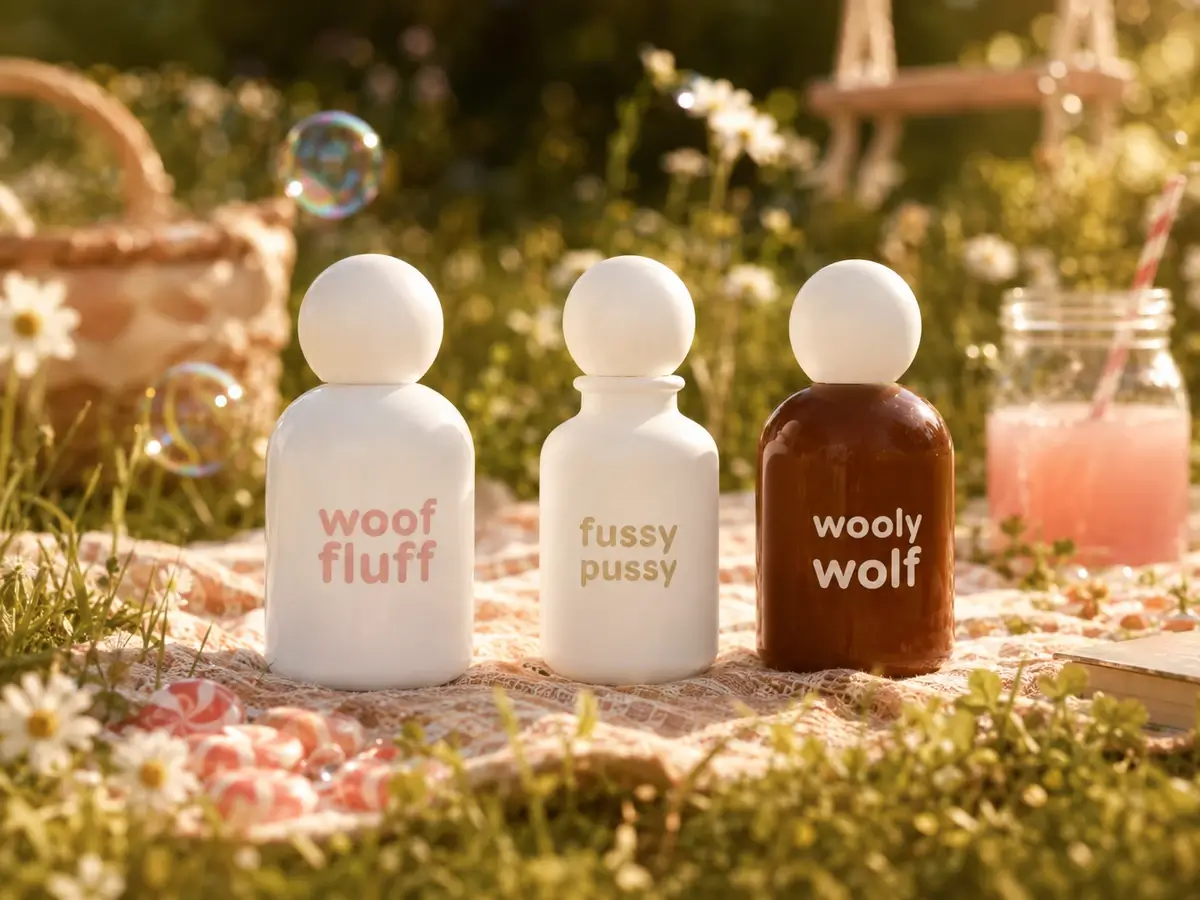
The most carefree version of such sweetness is bubblegum. Pink, light, a bit lighthearted, it doesn't try to be elegant in the classic sense. That's why it fits the theme of childhood so well. At Söppö, this direction appears in Woof Fluff — perfumes with the scent of bubblegum, which can be read like a scented postcard from a time when sweetness needed no justification.
A different effect is created by Fussy Pussy. This is not a loud or candy-like sweetness, but more milky, creamy, and close to the skin. It is associated with a soft dessert, cream, vanilla, something homemade and tender. It is like the scent of a moment when the world briefly becomes gentler — without a big event, without decorations, just close by.
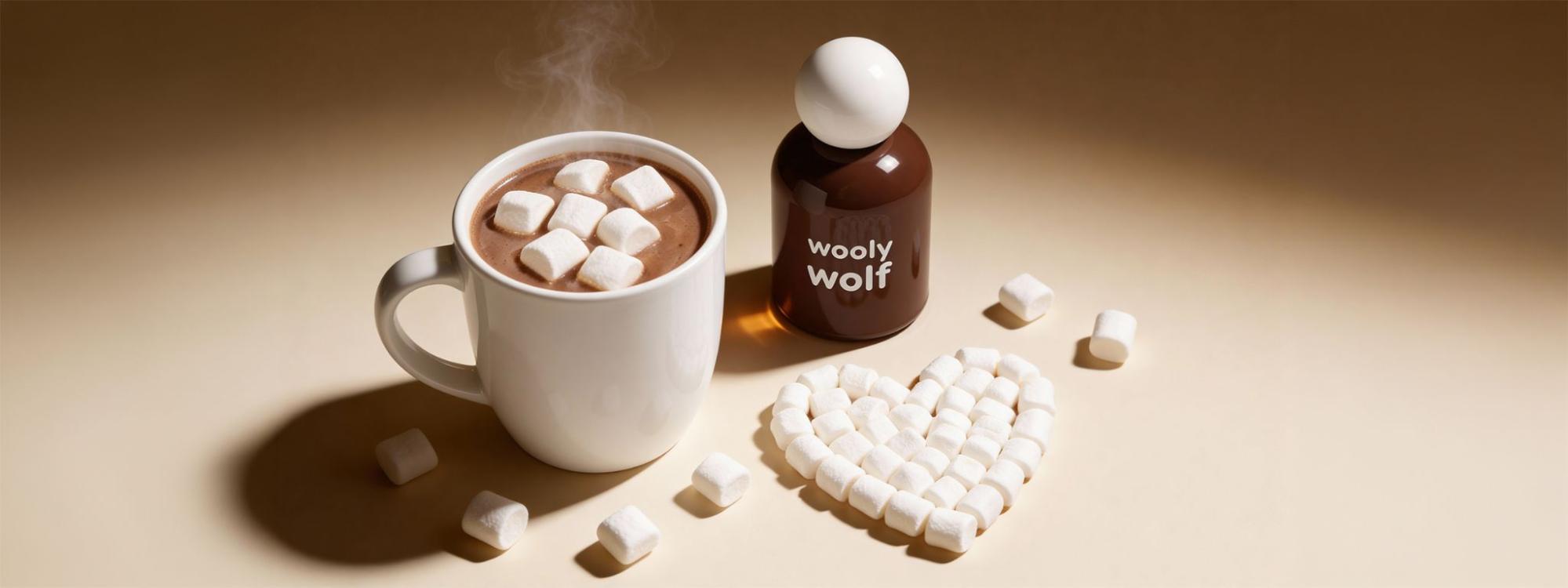
Yet another side of gourmand is shown by Wooly Wolf. This is the scent of hot chocolate with marshmallows: more wintery, thicker, enveloping. It is not as summery as fruits or flowers, but childhood doesn't only smell like autumn or vacations. Sometimes it smells like a mug held in your hands, the warmth after returning from the cold, and chocolate that leaves a sweet mark on your lips. In this form, gourmand is not just appetizing. It is safe.
Wild strawberry and lilac – summer garden scents that the skin remembers
Sweet perfumes do not have to lean solely towards vanilla, caramel, or chocolate. In summer, sweetness very often has a more natural rhythm: it is juicy, fruity, floral, sometimes green, sometimes delicate like the air after an afternoon spent in the garden. This is a sweetness that does not resemble a dessert, but a fruit picked from a bush, warm flowers by the fence, or a bouquet that for a moment smells like the entire beginning of summer.
The wild strawberry is exceptionally charming in this world. Small, hidden low, intense despite its size. It has something childish about it: bending down to the grass, looking for red dots among the leaves, hands smelling of fruit and earth. At Söppö, this direction appears in Mog Them — perfumes with the scent of wild strawberry, which show a fruity sweetness, juicy and close to the sun. This is not a heavy sweetness for evening outings, but the aroma of a small summer discovery.
Doggy Siren tells another version of the same lightness. Lilac is not gourmand; it doesn't smell like sugar or whipped cream. Its sweetness is floral, fresh, a bit romantic. It is associated with the garden, the first warm days, visits to grandma, and air that becomes heavier with flowers as the day slowly approaches evening. Wild strawberry and lilac thus show two different faces of summer sweetness: fruity and floral, juicy and nostalgic, simple and yet very personal.
When are sweet perfumes light, and when do they become evening scents?
Sweet perfumes can have very different tempos. Some stay close to the skin, are soft, everyday, and almost innocent. Others build a distinct, sensual trail from the first moment and are better suited for when the day slows down, the light becomes warmer, and the scent can afford a greater presence. Whether the sweetness will be light or more for the evening is decided not by its presence alone, but by which notes it has been combined with.
Lighter sweet perfumes are often based on fruits, flowers, fresher accents, or delicate musk. Such sweetness can accompany you all day because it does not dominate the space. It is more like a soft detail: perceptible, but not overdone. It gives an impression of cleanliness, warmth, or pleasant closeness, without the effect of a heavy, intensely sweet composition.
Scents where sweetness meets a stronger base behave differently. Vanilla, patchouli, sandalwood, musk, or a hint of pink pepper can give perfumes depth, elegance, and a more sensual character. Such compositions often fit better for evening outings, evening events, or special occasions because they leave a clearer impression. This does not mean, however, that they are "better" than lighter scents. They simply tell a different story — less carefree and more atmospheric.
Scent longevity in summer – what affects how perfume behaves on the skin?
In summer, perfumes may seem more present from the very first moment. Warm skin activates the composition faster, and higher temperatures make the aroma rise more strongly in the air. This is why the same scent that was calm and close to the skin in winter may seem more distinct in July. However, this does not always mean it will last longer.
Scent longevity depends on many things at once: the type of notes, the concentration of the composition, skin hydration level, body temperature, application method, and even how quickly we get used to our own perfume. Light notes usually develop faster and may disappear earlier, while heavier accents more often stay on the skin longer. Therefore, it is not worth judging a perfume only by the first few minutes. It is good to give it time and see how it behaves after an hour or two, not just right after spraying.
For everyday wear, a simple rule helps: apply perfume to well-moisturized skin and do not rub it after use. Friction can disrupt the top notes and speed up their volatility. It is also worth remembering that in summer, less often means more. If the scent stayed close to the skin but still returned with movement, heat, or a gust of air, it doesn't mean it's gone. Perhaps it is simply working more quietly — exactly the way some perfumes like to do.
How to choose sweet perfumes that aren't a counterpart to someone else's story?
In the world of perfumery, it's easy to fall into looking for similarities. Someone asks about a cult fragrance, someone else about a counterpart to a known composition, yet someone else is looking for perfumes that will smell "like something" they already know from the perfumery. This is understandable because scent is hard to describe without a point of reference. And yet, with sweet perfumes, it's sometimes worth turning the question around. Not: "what is this similar to?", but: "what does this scent remind ME of?".
Sweetness is very personal. For one person, the perfect choice will be a soft, creamy aroma close to the skin. For another, something fruity, fresher, and less obvious will turn out to be the excellent choice. Someone will look for a scent for special occasions, someone else for one that can be worn all day long. Versatility means that sweet perfumes can have many faces, but that is exactly why it is not worth confining them to a single pattern.
It's best to test the scent on your own skin and let it develop. The first impression is important, but only after some time can you see if a given composition really fits your rhythm. Whether it is too sweet or just pleasant. Whether it stays close or becomes too distinct. Whether it brings comfort or becomes tiring after an hour. Perfumes don't have to be someone else's story or a repetition of a known scenario. They can be something much more interesting: a small, personal trace that smells the way we want to feel.
A story from the brand founder – one summer, one trace
What I remember most strongly are not the big moments, but the completely ordinary ones. A summer afternoon when the air stood still, a curtain moved from a draft, and a sweet trace from an afternoon snack remained on the wooden table. There was nothing special about it, and yet that aroma returns to me to this day — warm, slightly sticky, homey, peaceful.
Over time, I understood that it is precisely such scents that stay with us the longest. Not always because they were beautiful in the classic sense. Rather because they were ours. Connected to a place, a body, a time of day, the voice of someone close, or the light coming through the window.
That's why when I think about perfumes, I don't just think about compositions. I think about small traces that can become someone's favorite scent. About aromas that don't try to prove anything but evoke positive associations and stay close to the skin like something our senses have known for a long time.
Conclusion – a scent that doesn't have to be adult
We often treat sweet perfumes as something obvious: they are meant to be pleasant, feminine, sensual, or fit a specific occasion. And yet, their greatest strength may lie elsewhere — in that quiet ability to evoke states we long ago considered lost. Carefreeness. Peace. Curiosity. Joy in simple things.
In summer, it's easier to allow yourself such a choice. For a scent that doesn't have to be serious, perfect, or similar to any known composition. It can be soft, sweet, fruity, floral, enveloping, or completely non-obvious. The important thing is that it sits well on the skin and fits how you want to feel.
Because sometimes the best perfumes are not the ones that make the biggest impression. They are the ones you want to return to — like a vacation memory that still smells of warmth.
FAQ – sweet perfumes and summer scents
Are sweet perfumes suitable for summer?
Yes, sweet perfumes can work well in summer if they are not too heavy or overwhelming. On warm days, it's often better to choose compositions where the sweetness is balanced by freshness, a fruity accent, flowers, or delicate musk.
Are sweet women's perfumes always intense?
No. Sweet women's perfumes can be light, soft, close to the skin, and very suitable for everyday wear. Intensity is determined by the entire composition, not just the presence of sweet notes.
What affects scent longevity in summer?
Scent longevity is influenced by, among other things, the type of notes, skin temperature, its hydration level, application method, and composition concentration. In summer, a scent may develop faster, but this doesn't always mean it will last longer on the skin.
Does a sweet scent always mean gourmand?
No. Gourmand refers to scents associated with desserts, creaminess, and the sweetness of food, but a sweet scent can also have a fruity, floral, honeyed, or musky character. Sweetness in perfumes has many shades.
How to choose sweet perfumes for yourself?
It's best to test the scent on your own skin and give it time to develop. It's worth being guided not only by whether a composition is fashionable or well-known, but above all by whether it evokes pleasant associations and fits well with your way of wearing perfume.