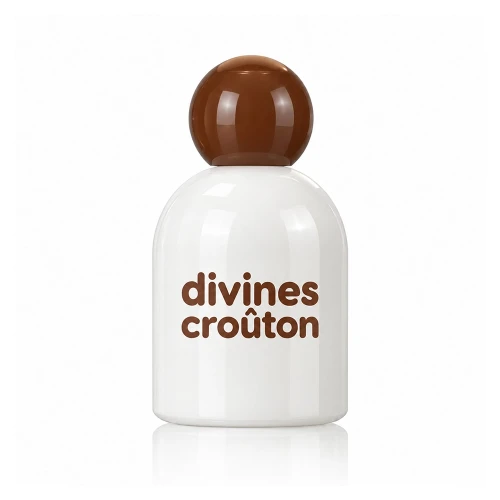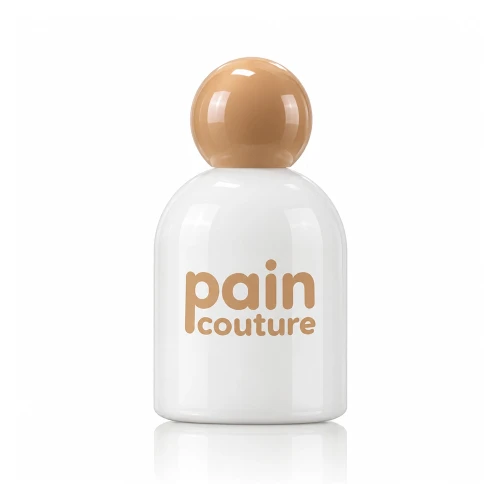
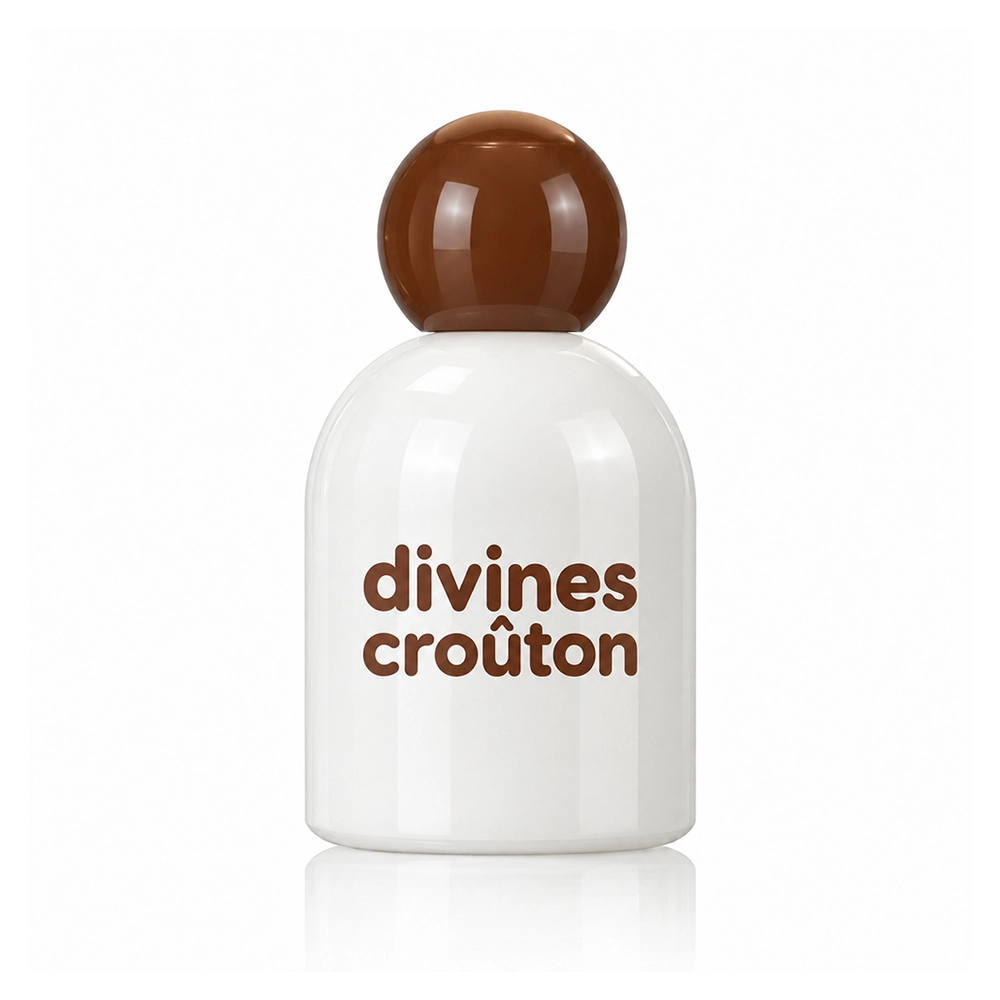
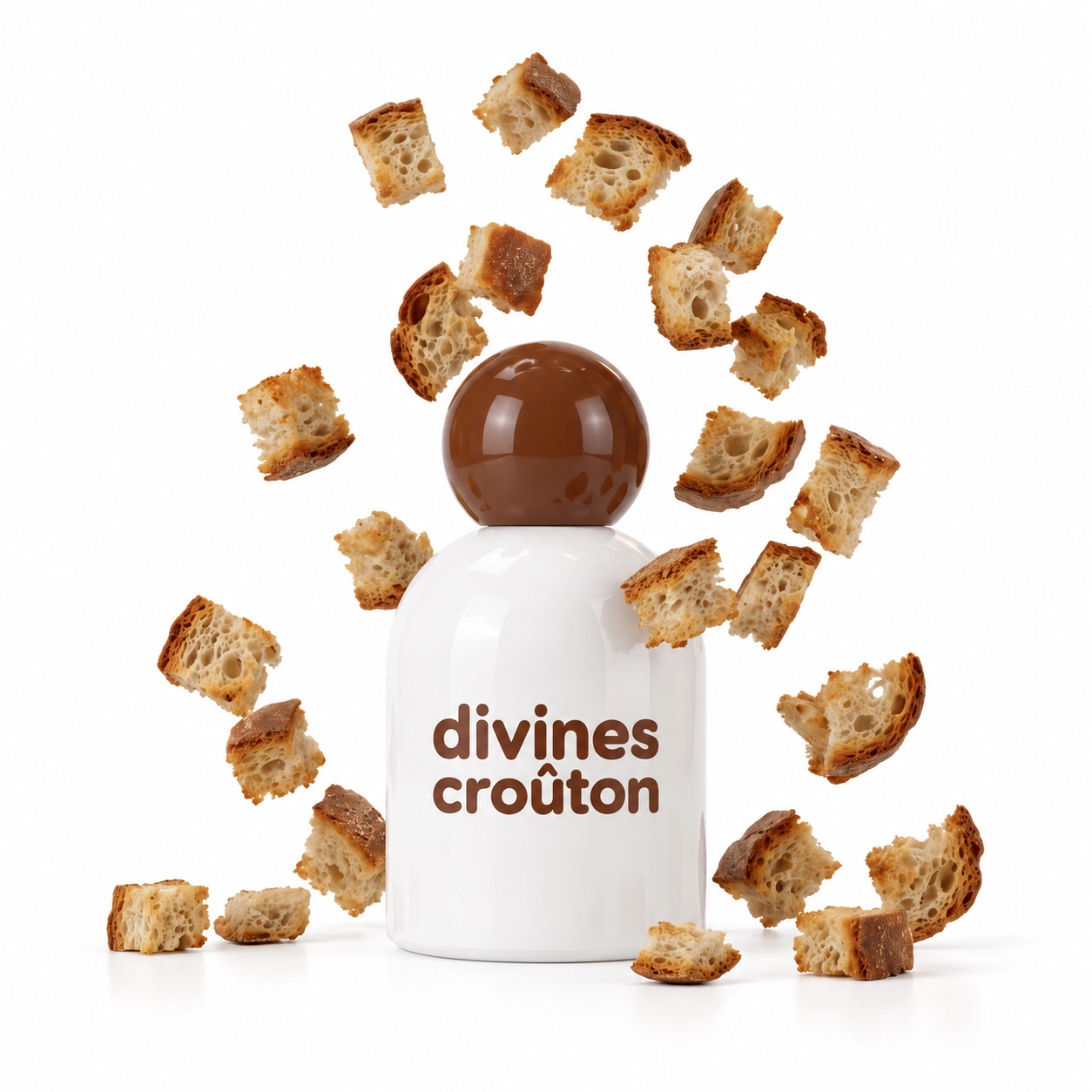


Divines Croûton Sourdough Bread Perfume (Parfum) 50 ml

Here is the essence of home. Where the concrete slabs were grand. And the space between them, for many, not much. We lived crowded, in a tightness that sometimes protected. The blocks were as gray as the faces of their residents. Trod paths led to the same places. For you, every face and every path was different. Those colors, those smiles, everything we did although we shouldn't have. Time under the rug beater and over the metal garage. Someone chased us away, someone threw a stone. From above, the blocks weren't so gray anymore. Trees grew between them. Friends appeared. From the windows, grandmothers always threw us bread. That is what home smells like.
Divines Croûton sourdough bread scented perfume
Divines Croûton is the scent of home. You are born in a concrete housing estate. Not the worst place in the world, but not one anyone dreams of either. A gray block, a rug beater, a kiosk, and a row of metal garages. Your parents furnish their first home themselves, with whatever they happened to find. It isn't particularly solid. In fact, it isn't even theirs. You quickly realize that you probably won't inherit an apartment from your ancestors. At most, an attachment to the same estate. You know every path here, every patch of green, every balcony from which someone occasionally yells at you or looks out to check if you're there. The blocks are as gray as the faces of their residents. But only from afar. For you, every face is worth remembering.
Since childhood, you are often hungry, which is why bread starts to mean a little more to you than to others. You know its scent by heart: the hard, baked crust and the yeasty warmth that briefly makes the world seem safer. You don't always get it fresh. Sometimes it's from yesterday, dried out. Hunger, however, quickly teaches you that not everything has to be perfect to taste good. Except that over time you begin to understand that you can have a full stomach and still be malnourished. Bread quiets hunger for a moment, but when you get it too often and too little of anything else, you start lacking what you truly need. You grow weak. Sometimes your stomach hurts. Perhaps the worst part is that others give it to you out of the goodness of their hearts. For them, it's help. For you, sometimes the only thing you'll eat that day. Maybe that's the most bitter part of this story. Sometimes someone wants to help you. They just don't know how.
You were loved many times and abandoned almost as many. Someone will chase you away. Someone else will look out for you every day, worrying when one day you don't show up. You get used to the fact that you can be part of a place and never truly belong to it. In the family, they said things used to be different. Once you had a real brick house. Great-grandfather was in the military. Grandfather was a postman. Father was supposed to do the same. He knew everything that had been taught in your family for generations, but when his turn came, the world had managed to change. Father was already unemployed. Not because he lacked skill. Simply because no one needed what he knew best anymore. In your family, you were always good at returning. Once, it was a valuable skill. Then man invented faster ways of sending messages, and suddenly no one was waiting anymore. You became a pest.
You didn't inherit a home. You inherited the skill to return to it. Only more and more often, there was nowhere left to go. Today you live wherever survival is possible: on a ledge, under a bridge, above a metal garage, behind an air conditioner, on a balcony until someone notices. In the places you choose for a home, people install nets and metal spikes. They say you're dirty, that there are too many of you, that you shouldn't be here. A bit strange, because you didn't end up near people by accident. For generations, it was man who bred you near them, built houses for you, fed you, took you along, and entrusted you with messages. And when they no longer needed you, subsequent generations remained in the cities they had learned to consider their own.
This was not the story of a boy raised on a housing estate. This was the story of a pigeon.
An urban, ordinary one, one of those you pass so often you stop seeing them. People are often kind to them individually and merciless collectively. One elderly lady will stop in the square. An entire building will install spikes. One child will have their favorite pigeon. Someone else will say they are all the same. And yet, for him, people aren't the same either. Some chase them away. Others throw stones. And from the windows, grandmothers always threw bread. Maybe that's why everything in this story smells of it. Not of a fancy cake, a buttery brioche, or a vanilla bun. Bread. One of the simplest scents we know, and at the same time, one that can mean home, satiety, and safety. For some, it's a sandwich eaten on a rug beater. For others, a bakery passed in the morning on the way to work. And for him, perhaps a memory of those brief moments when the world paid attention to him. Though it would be better if he were given grain.
In psychology, scent is one of the strongest carriers of memories and emotions, and aromas related to daily, repetitive experiences have special power. The smell of bread can evoke not one specific event, but an entire place: a kitchen, a family table, a neighborhood bakery, or a moment when someone shared what they had with us. Divines Croûton tells the story of exactly such a home. Not always perfect and not always truly ours, but built from places, faces, and small gestures that we return to in memory years later. Sometimes home doesn't smell like perfume. It smells like ordinary bread.
Bread in its purest form - warm, floury, and with sourdough
Divines Croûton was created to capture the scent of freshly baked bread as faithfully as possible. Sourdough. A heavily baked crust. A moist crumb. The warmth of a sliced loaf. Sometimes it is the simplest scent that carries the most. Divines Croûton contains 30% fragrance composition and belongs to the parfum category, which means perfume extracts. The high concentration allows the bakery accord to stay on the skin as long as possible for this specific scent.
Just a small note from our neighborhood kids: leave the bread on your wrist. Give the pigeon grain. Bread quickly fills a bird's stomach but doesn't provide what it truly needs. Eaten regularly, it can displace valuable food, leading to deficiencies, weakness, and digestive system problems. The salt present in bread further burdens the bird's organism and can lead to, among other things, dehydration and kidney problems. And moldy bread can do even greater harm. So if you want to do something good for an urban friend, don't throw him a slice "so he at least eats something". Choose millet, oats, wheat, or an appropriate grain mix for pigeons. And if you only have a regular grocery store nearby, check for oatmeal, rice, split peas, or unsalted sunflower seeds. Without salt, spices, or other human enhancements.
Fragrance pyramid of Divines Croûton bread-scented perfume
Top notes: sourdough bread
Heart notes: sourdough bread
Base notes: sourdough bread
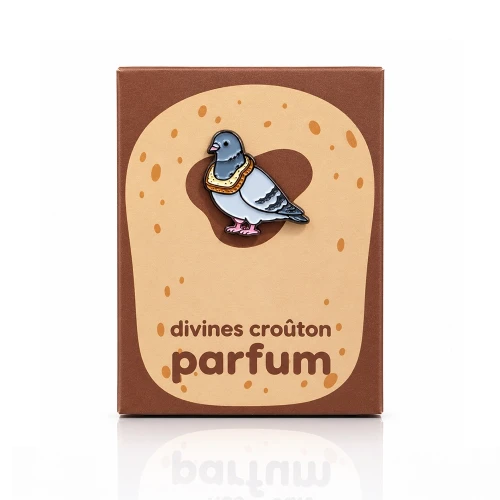
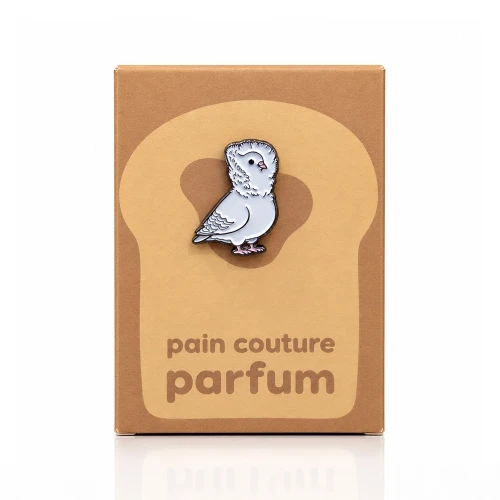
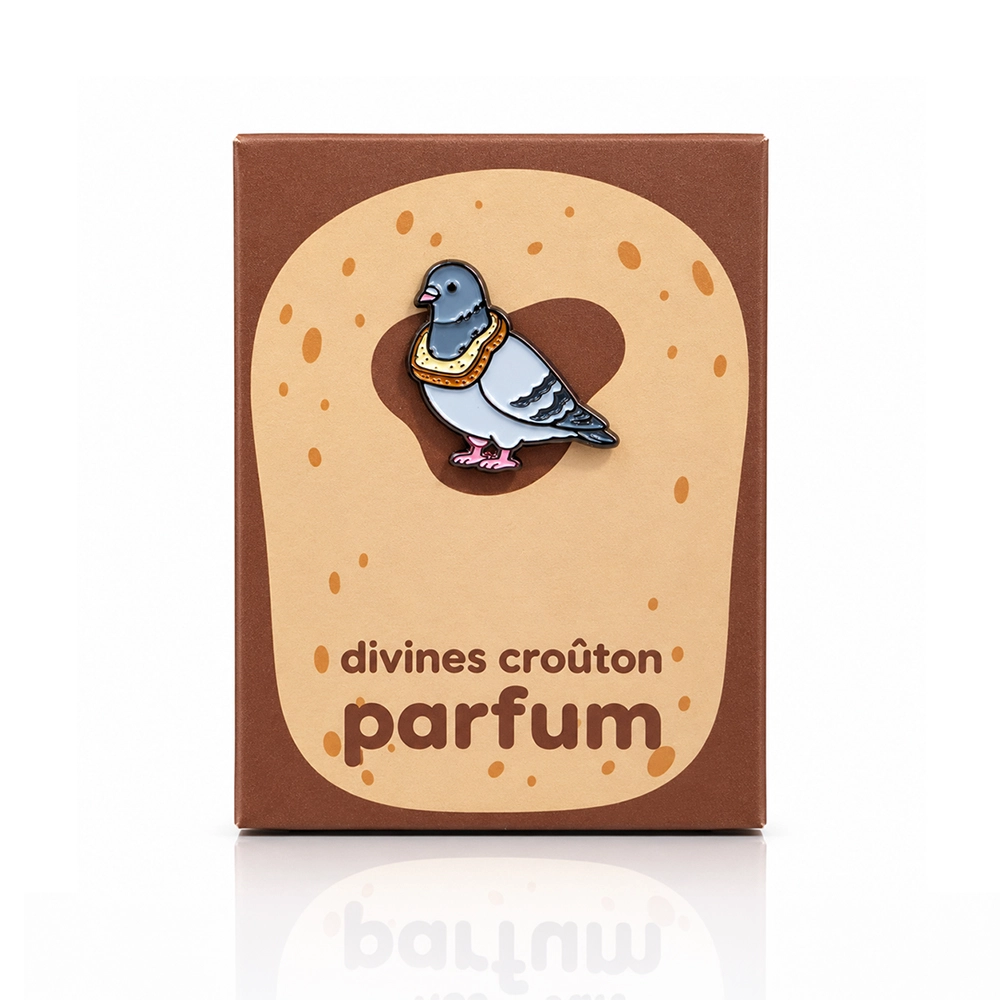
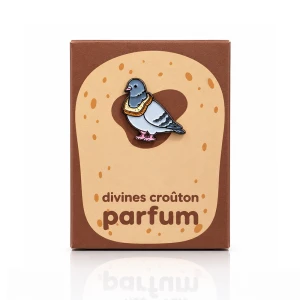
PS Our perfume comes in a box with a Pigeon King pin attached. The slice of bread around his neck looks a bit like a thick gold chain. Real gangsta. Bread chain. Except that in real life, such a necklace isn't precious at all. If a slice gets stuck on a pigeon's neck and he can't shake it off himself, it can restrict freedom of movement, interfere with foraging, flight, and a quick escape. And in the city, sometimes those few seconds decide whether he manages to dodge a bicycle, a car, or another threat. If you encounter such a Pigeon King, don't just leave him with his crown and title. If you can do so safely, try to gently remove the slice from his neck.
Reviews
If you've added a review and it doesn't appear on the list, it may be pending moderation.
Leave feedback on the product
Bestsellers
-
Bestseller New Product

Recipe for “The Sorceress’s Scent: The Crone” Doggy Siren 50 ml | Foxy Nixie 50 ml
Price €49.64 -
Bestseller New Product

Recipe for “The Sorceress Scent: The Mother” Doggy Siren 50 ml | Tangy Tankie 50 ml
Price €49.64 -
Bestseller New Product

Recipe for “The Enchantress’s Scent: The Maiden” Doggy Siren 50 ml | Bittsy Pixie 50 ml
Price €49.64 -
Price €26.00
-
Price €26.00
-
Price €26.00
-
Price €26.00
-
Price €26.00
-
Price €26.00
-
Price €26.00
-
Price €26.00
-
Price €26.00
-
Price €26.00
-
Bestseller New Product

Recipe for "Chocolate Milkshake" Fussy Pussy 50 ml | Wooly Wolf 50 ml
Price €68.02 -
Bestseller New Product

Recipe for "Rhubarb Gin & Tonic" Tangy Tankie 50 ml | French 75 50 ml
Price €83.78